Overview: cruise travel departing from Indian ports, with comparison and explanation of cruise price offers, departures and practical booking details for sailings originating from Mumbai and Kochi. India cruise deals typically display a base fare (cruise‑only or cruise+package) and may include or exclude taxes, port fees, basic meals and limited transfers. Fare listings can show taxes, port fees and service charges either included or separately; listing notes should be checked. Many India listings include limited‑time promotions such as onboard credit (examples up to $500 USD) or cabin upgrades; terms and availability vary.
Mumbai has a higher volume of sailings and a wider range of international and long‑haul deals; Kochi offers fewer but steadier regional departures. An example near‑term published sailing is Dec 2, 2026 — Silver Muse (Silversea) — Mumbai → Kochi → Colombo → Phuket → Singapore.
Common itinerary types for India departures include coastal short roundtrips, Lakshadweep/island cruises, Southeast Asia circuits and Indian Ocean passages. Frequent ports of call include Colombo, Phuket, Penang, Singapore and Kochi. Operators range from India‑focused lines (Cordelia, Resorts World One, MV Mahabaahu) for short regional cruises to international lines (Royal Caribbean, MSC, Silversea, NCL) for longer voyages. Cabin categories follow industry norms — inside, oceanview, balcony and suite — and typical cruise lengths run from short coastal (2–4 nights) to regional (5–10 nights) and long/international (10+ nights).
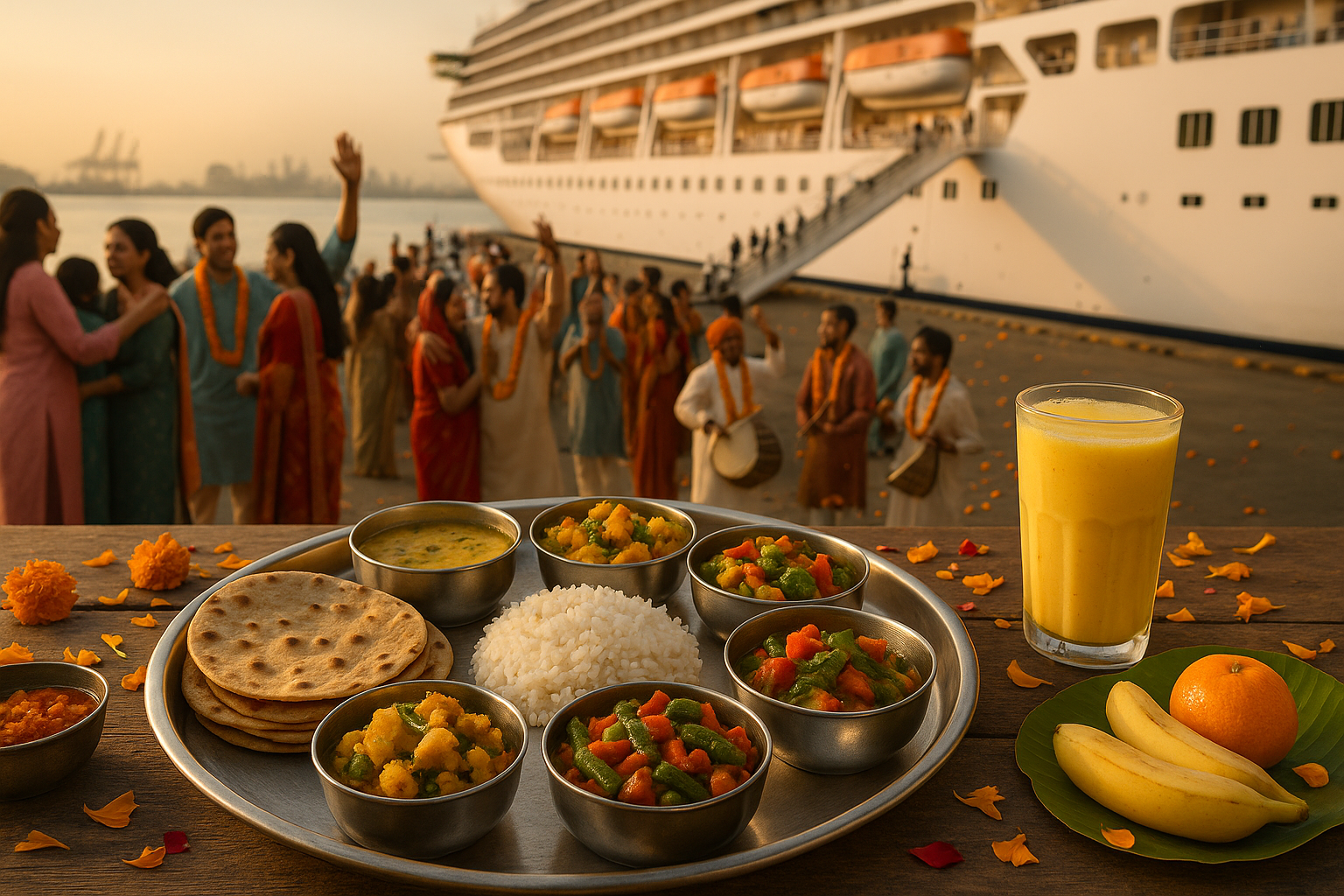
What is included in cruise deals and price offers from India?
India cruise deals display a base fare (cruise‑only or cruise+package) and may include or exclude taxes, port fees, basic meals and limited transfers; promotions sometimes add onboard credit or cabin upgrades, with terms varying by offer.
Listings show a per‑person base fare and either indicate "taxes and fees included" or list those charges separately. Cruise‑only fares are listed alongside cruise+package options that bundle hotels and transfers; booking notes indicate whether taxes, port fees and service charges are pre‑paid. Labels such as "taxes & fees included" appear on aggregator listings and on The Cruise Web.
Common inclusions and exclusions:
- Cabin fare type: cruise‑only versus cruise+package (packages often add hotels and transfers).
- Meals: main/standard meals are typically included; Indian cuisine is offered on many sailings.
- Transfers: some transfers are included in cruise+package itineraries; cruise‑only fares frequently exclude transfers.
- Taxes and fees: may be included or shown separately; the listing note specifies the treatment.
- Extras: shore excursions, speciality dining and travel insurance are commonly excluded and charged ashore or sold as add‑ons.
What fare types, taxes and fees are included or excluded in advertised India deals?
Fare listings are presented as either 'cruise‑only' (fare for cabin only) or 'cruise+package' (fare plus hotels and transfers). Taxes, port fees and service charges may be included in the advertised price or shown as separate line items; listing notes should be verified, since applicable taxes and fees vary by itinerary and port.
Taxes and fees are sometimes bundled into the advertised price (many listings flag "taxes & fees included"); other times they appear as a separate charge on the itinerary or at checkout. Cruise Critic partner listings distinguish cruise‑only and cruise‑package pricing and indicate whether taxes and fees are included. The final per‑person total should be verified before completing a booking.
Typical deal inclusions and exclusions (meals, transfers, excursions, insurance)
Common inclusions in advertised India cruise deals cover main meals, select port taxes and some transfers. Common exclusions include shore excursions, speciality dining, premium beverages and travel insurance.
Common inclusions
- Main meals in the main dining room and buffet.
- Select port taxes or a portion of taxes and fees (when listing states "taxes & fees included").
- Transfers when booking a cruise+package (packages often include transfers and Indian meals).
Common exclusions
- Shore excursions and private tours (booked ashore or through the cruise line).
- Speciality restaurants, premium beverages and some onboard services.
- Travel insurance and visas.
- Transfers may be excluded for cruise-only fares; confirmation of transfer inclusion is recommended.
Do India cruise deals commonly include onboard credit, cabin upgrades or limited‑time promos?
Many India listings include limited‑time promotions such as onboard credit (up to $500 USD) or cabin upgrade offers; promotional labels (flash sale, TCW EXCLUSIVE) vary by seller.
Promotions appear frequently on aggregator and reseller sites. The Cruise Web commonly displays offers labeled "Up to $500 FREE Onboard Credit" and badges such as "TCW EXCLUSIVE." Flash sale and last‑minute deal labels are used by multiple booking sites. Onboard credit and cabin upgrades are often restricted by cabin category, booking window, or promotional code; full terms should be reviewed to confirm applicability.
Example: "Up to $500 (USD) FREE Onboard Credit" appears on some The Cruise Web listings.
Which departure port — Mumbai or Kochi — has more sailings and better deals?
Mumbai typically has more sailings and a wider range of international and long‑haul deals; Kochi offers fewer but steady regional departures. Availability often peaks during the winter cruise window (Oct–Feb).
Cruise Critic and CruiseWeb listings show multiple long international and world‑cruise segments leaving from Mumbai; Thrillophilia highlights many Mumbai‑based regional routes (Mumbai–Goa, Mumbai–Lakshadweep). Kochi functions as a smaller, more regional departure hub with steadier monthly volumes.
Reasons to select each port:
- Mumbai — Higher sailing volumes and a greater variety of international and long‑haul itineraries; wider promotional variety, including onboard‑credit offers and TCW EXCLUSIVE labels on some sailings; suitable for travellers prioritizing route variety and larger promotions.
- Kochi — Fewer departures focused on regional and India‑coastal itineraries; often competitive regional fares and steadier scheduling for short cruises; suitable for travellers seeking short regional sailings or simpler logistics.
Monthly sailing volumes and deal frequency from Mumbai vs Kochi
Mumbai shows higher monthly sailing volumes and more international itineraries; Kochi has fewer departures focused on regional routes—seasonal peaks align with the winter cruise season (Oct–Feb).
Mumbai search results on Cruise Critic and CruiseWeb visibly list multiple long‑haul and international itineraries departing from Mumbai, and Thrillophilia lists many Mumbai‑based routes such as Mumbai–Goa and Mumbai–Lakshadweep. Kochi appears in listings but with fewer overall departures and a stronger emphasis on regional itineraries. Availability and deal frequency often increase during the winter cruise window (Oct–Feb), so check those months for more options.
Which port typically has lower fares or better promotions?
Mumbai typically posts a wider range of promotions and occasional larger onboard‑credit offers; Kochi may offer more competitive regional fares. Promotional labels such as "Up to $500 FREE Onboard Credit" and "TCW EXCLUSIVE" frequently appear on Mumbai departures and international itineraries. CruiseBooking recommends comparing prices by departure port and cabin class and notes that last‑minute and flash sales can determine which port is cheaper on specific dates. Comparison of departure dates and cabin categories identifies the most favorable fares for particular travel preferences.
What cruise departures are available from Mumbai and Kochi?
Upcoming departures include short regional roundtrips (Mumbai–Goa), regional island routes (Lakshadweep), and international segments to Colombo and Southeast Asia. Departure filters on the site enable filtering and booking of sailings. Schedules vary by season and cruise line, and some itineraries depart from Mumbai and include Kochi as a port of call. Live availability, cabin reservation options, and port details for Mumbai and Kochi are provided in the booking flow.
Next available sailings — dates, ship names and cruise lines
The next near‑term sailing with a published date from Mumbai is Dec 2, 2026 — Silver Muse (Silversea).
Example upcoming departures:
- Dec 2, 2026 — Silver Muse (Silversea) — Mumbai → Kochi → Colombo → Phuket → Singapore.
- Next available — Kochi — departures vary; the booking search (Departure Port = Kochi) lists current sailings. Template: "Date — Ship (Cruise Line) — Kochi → [destinations]"
How to filter departures by date, duration or cruise line
Available filters: Departure Date, Cruise Length and Cruise Line. Setting Departure Port to Mumbai or Kochi narrows results.
- Departure Date: limits results to specific months or a date range.
- Cruise Length: ranges are 1–5, 6–9, 10–14 and 15+ nights, useful to isolate short roundtrips or longer regional/international voyages.
- Cruise Line: restricts results to operators such as Cordelia, Resorts World, Silversea and Regent/Seven Seas.
Alerts can be saved and searches repeated periodically to reveal newly published sailings and promotional offers through the booking flow.
Which itineraries and popular destinations are offered on cruises departing India?
India departures offer coastal short trips, Lakshadweep/Andaman island cruises, Southeast Asia routes (Singapore, Phuket, Penang) and Indian Ocean crossings (Maldives, Sri Lanka).
These sailings range from one- to multi-week voyages and can be local round‑trips or longer point‑to‑point passages that connect Mumbai, Kochi or other Indian ports to regional hubs.
Common itinerary types for India departures (coastal, Lakshadweep, Southeast Asia, Indian Ocean)
Common itinerary types are coastal rounds, Lakshadweep/Island cruises, Southeast Asia circuits and Indian Ocean passages.
Below are common itinerary categories with representative examples and typical duration ranges.
- Coastal — coastal: short round‑trips that hug the Konkan or Kerala coast; example routes include Mumbai–Goa–Mumbai and Mumbai–At Sea–Goa; typical duration: 1–5 days.
- Lakshadweep/Island — Lakshadweep/Island: island‑focused cruises calling small atolls and beaches; example routes include Mumbai–Lakshadweep–Mumbai and Goa–Lakshadweep–Mumbai; typical duration: about 3–7 nights.
- Southeast Asia — Southeast Asia: multi‑port regional circuits that link India with Thailand, Malaysia and Singapore; example routes include Mumbai → Singapore and multi‑port sailings calling Phuket, Penang and Langkawi; typical duration: 6–14+ nights.
- Indian Ocean — Indian Ocean: longer passages that include Maldives and Sri Lanka as principal calls; example routes include Mumbai → Malé and Mumbai • Kochi • Colombo • Hambantota • Trincomalee • Phuket → Singapore; typical duration: 6–14+ nights or longer for extended circuits.
Operators range from Indian lines (Cordelia, Resorts World One) on short coastal and island sailings to international lines (Silversea, Seven Seas) on extended Southeast Asia and Indian Ocean itineraries.
Most frequent ports of call and why they are popular
Most frequent ports of call from India departures include Colombo, Phuket, Penang, Singapore and Kochi.
Colombo is a frequent call; proximity to India, established cruise berths and a wide range of shore‑excursions contribute to its appeal. Phuket appears frequently on itineraries for its beach resorts, excursion variety and prominence on regional cruise circuits. Penang features for its heritage and food tourism, and convenient routing between Malaysia and Thailand. Singapore functions as a major cruise hub, offering extensive port infrastructure, international flight connections and regular turnaround operations. Kochi often serves as a domestic embarkation and termination port, providing access to Kerala shore excursions and recurring placement on India‑departure itineraries.
Which cruise lines operate sailings from India?
Operators range from India-focused lines (Cordelia, Resorts World One), which operate short regional cruises, to international lines (Royal Caribbean, MSC, Silversea, Norwegian Cruise Line) that operate longer overseas voyages.
India-focused operators conduct short coastal and domestic roundtrips from ports such as Mumbai, Goa and Kochi. International brands operate longer cross-border itineraries and world-cruise segments that call at or originate from Indian ports; these sailings are commonly sold through Indian agents and tour operators. Travel agents and India-facing booking sites list both operator groups, permitting selection according to preference for short regional cruises or extended international voyages.
Operators for short regional versus long international voyages
Regional operators (Cordelia, Resorts World One, MV Mahabaahu) focus on short coastal and domestic routes; international operators (Royal Caribbean, MSC, Silversea, NCL) run longer overseas and world cruises and are commonly marketed from India.
Here are the main operator groups and the typical route types they run.
- Regional — Cordelia, Resorts World One, MV Mahabaahu: Regional lines operate short roundtrips and coastal sailings (Mumbai–Goa, Mumbai–Lakshadweep, day/overnight cruises) focused on domestic tourists and short‑break itineraries.
- International — Royal Caribbean, MSC, Silversea, NCL: International lines operate longer voyages (Southeast Asia, Arabian Gulf, Mediterranean, world‑cruise segments) that may depart from or call at Indian ports and are widely sold through Indian travel agents and package providers.
Which lines provide Indian, vegetarian or Jain meal options onboard?
Many lines that sell sailings from India, including Cordelia and mainstream international operators sold via Indian agents, provide Indian and vegetarian options onboard. Jain meals usually require an advance request and may be restricted to main-dining venues.
Requests for vegetarian or Jain meals are typically submitted at booking or at least several days before sailing; agents such as CruiseBay and Thomas Cook can submit special-diet requests on behalf of passengers. The main dining room usually accommodates special meals; speciality restaurants may offer limited options or charge extra and may be unable to prepare strict Jain menus without advance notice.
For cruises that explicitly include Indian cuisine or special-diet options, see Book Cruises with Indian Cuisine Included: Indian, Vegetarian, and Jain Menu Options.
What cabin types and trip durations are typical on India departures?
Cabin types follow industry norms—inside, oceanview, balcony and suite—and durations range from short 2–4 night coastal sailings to 5–10 night regional cruises and 10+ night international voyages.
Shorter sailings typically have lower total fares; longer itineraries tend to cost more and frequently include additional bundled services such as transfers, specialty dining credits or excursions.
Cabin categories (inside, oceanview, balcony, suite) — quick pros and cons
Inside, oceanview, balcony and suite cabins are standard categories on India departures, each aligned with different budgets and comfort priorities. A concise pros and cons list follows.
- Inside — Most budget-friendly; no natural light or external views. Frequently available as last‑minute fares.
- Oceanview — Window or porthole provides natural light and an external view; typically priced below balcony cabins.
- Balcony — Private outdoor space and direct sea views; favored by travellers prioritizing fresh air and privacy. Common on ships such as Cordelia Cruises and Resorts World One. Early booking is recommended to secure balcony accommodation.
- Suite — Largest cabins with additional amenities (expanded living area, enhanced room service, priority options on some lines); occupies the highest fare tier.
Typical cruise lengths for India departures and how duration affects price
India departures are commonly grouped into three length categories: short coastal (2–4 nights), regional (5–10 nights) and long/international (10+ nights). Short coastal cruises typically have lower total fares, fewer ports of call and more limited included services. Regional sailings often command higher total fares, visit additional ports and include more bundled services. Long and international itineraries tend to result in higher total fares and add cross‑border transit and expanded onboard or shore inclusions. Comparison of per‑night rates and bundled inclusions yields a clearer measure of relative value.
Practical booking and travel details (visas, holding cabins, promotions)
Passport validity and destination visa requirements must be verified before booking. Deposit and hold policies vary by seller: some agents permit a short no‑fee hold; many require a deposit and set final payment deadlines weeks before sailing. Cancellation and refund terms differ by fare class.
Quick essentials:
- Passport & visas — passport validity requirements apply for international sailings; visa obligations depend on ports of call. Embassy and consulate websites and cruise operator advisories provide current requirements.
- Deposit/Hold & payments — policies differ by agency and fare: short no‑fee holds are occasionally available, deposits are commonly required, and final payments are typically due several weeks prior to departure. Cancellation and refund conditions are determined by fare class and provider.
- Promotion timing & strategy — wave season and flash sales create short windows with reduced fares or added perks such as onboard credit. Subscribing to deal alerts, applying flexible‑date searches, and monitoring last‑minute listings improves the chance of securing promotional offers.
Passport, visa and transit document requirements for cruises departing from India
A valid passport is required for international sailings. Visas must be obtained for ports of call that impose visa or transit-document requirements. Cruise operators publish advisories that list required documents and entry procedures for each itinerary. Confirm visa and transit-document rules with the embassy or consulate of each destination. Travel agencies such as IMAD Travel can provide visa-assistance services.
Payment, deposit and cancellation basics for holding a cabin
Hold and deposit policies vary by seller. Some agents permit a short no‑fee hold or accept a small deposit; others require immediate deposit to confirm a booking. Final payment deadlines are typically several weeks before sailing; promotional fares often impose earlier deadlines.
- Deposit/Hold: Rules differ by seller. CruiseBooking reports that some agents permit a short no‑fee hold or small deposit, whereas others require immediate deposit.
- Timeline examples: A deposit is typically required to confirm a cabin; final payment is due several weeks before sailing. Promotional fares frequently set earlier final‑payment deadlines.
- Cancellation/refund: Cancellation penalties and refund timelines depend on fare class and the operator’s policy; promotional fares commonly carry reduced refunds. The agent’s cancellation and refund terms should be confirmed before booking completion.
How flash sales, wave‑season and last‑minute promotions affect pricing and availability
Wave season and flash sales create short windows with reduced fares or added perks such as onboard credit. Promotions frequently substitute a lower advertised cruise fare with non‑cash incentives (onboard credit, drink or dining packages); net value comparisons are necessary rather than relying on headline savings. Examples on CruiseWeb and CruiseBooking illustrate onboard credit appearing in flash offers. Subscribing to deal alerts, using flexible‑date searches and monitoring multiple agents during flash‑sale periods increases the likelihood of securing the best net savings.