A senior citizen cruise is a cruise travel product configured for older passengers with accessible cabins and public spaces, onboard medical capability, culturally appropriate dining (Indian vegetarian and Jain) and relaxed, low‑walking itineraries; this page focuses on senior‑friendly cruise choices and enabling features for older Indian travellers.
Choose routes such as Mumbai–Goa, Mumbai–Lakshadweep, Chennai–Andaman, Mumbai–Kochi and short Kochi sailings to Sri Lanka or the Maldives; Mumbai–Goa is typically 3–4‑night coastal sailings with minimal transfers and low shore‑walking, Mumbai–Lakshadweep is typically 7–9 days with calm island stops that may require tendering, Chennai–Andaman is typically 5–7 days with scenic island stops that may require tendering, and Kochi–Sri Lanka or Kochi–Maldives are short regional options that require a passport and may require visas or pre‑clearance (Kochi–Maldives itineraries often last 7–10 days and may involve tendering). Routes calling major cruise terminals (Mumbai, Kochi when a terminal is used) involve minimal tendering and low shore‑walking.
Short (2–5 night) cruises minimise travel strain; medium (5–10 night) cruises balance exploration and rest; long (10+ night) cruises require stronger stamina and detailed health planning. Most modern ships offer wheelchair‑accessible cabins, lifts, ramps and adapted public spaces; book accessible staterooms early and notify the cruise line in writing with required medical details. Ships have medical centres staffed by a doctor and nurses for outpatient care and basic diagnostics; serious emergencies may require medevac or diversion to a port and external hospital transfer, so you should carry travel insurance with medevac cover and notify the line before sailing. Many lines can provide strict Jain meals if requested well in advance; you should log dietary preferences at booking, reconfirm on the pre‑sail form and confirm with the dining manager at embarkation. Choose shore excursions labelled "easy" or "accessible", favour coach drives and scenic tours, and confirm transport type and estimated walking distance to minimise walking.
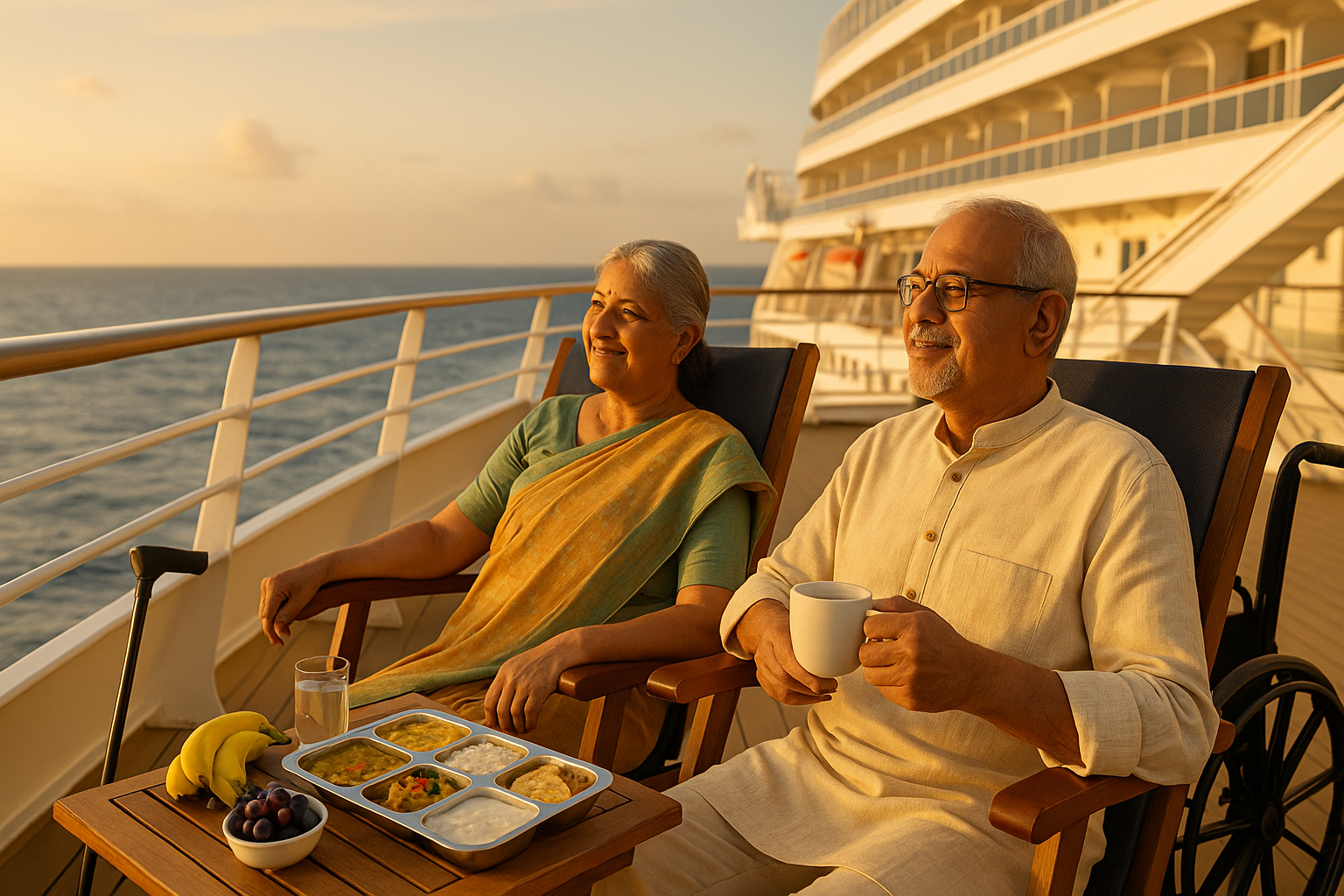
Which India domestic and nearby regional cruise routes are suitable for senior travellers (for example Mumbai–Goa, Lakshadweep, Andaman)?
Common senior‑friendly routes include Mumbai–Goa, Mumbai–Lakshadweep, Chennai–Andaman, Mumbai–Kochi and short Kochi sailings to Sri Lanka or the Maldives; choose routes with cruise terminals, short shore transfers and few long walks.
Cruises with short sailings and well‑equipped ports suit seniors because they minimise long transfers, reduce stair/climb exposure and offer hotel‑style services onboard. Pick itineraries that call established terminals and offer shore excursions labelled “easy” or “low physical rating” to match Kesari‑style slow‑packed pacing and Royal Caribbean guidance on accessibility.
Please find common routes and a one‑line suitability descriptor for each below:
- Mumbai–Goa — Short 3–4‑night coastal sailings with minimal transfers; shore access often via a cruise berth or short launch, low shore‑walking.
- Mumbai–Lakshadweep — Longer 7–9‑day island itinerary with calm stops; shore access may require tendering and gentle beach walks.
- Chennai–Andaman — Typically 5–7‑day island cruises with scenic stops; shore access may require tendering and some shore‑walking to sights.
- Mumbai–Kochi — 5–7‑day coastal cruise with port calls at developed harbours; often uses cruise terminals (lower tendering) and short walks ashore.
- Kochi–Sri Lanka — Week‑long regional sailing with cultural ports; passport is required and shore‑walking is usually moderate.
- Kochi–Maldives — 7–10‑day regional cruise with resort/atoll stops; passport is required and some calls may involve tendering and short beach walks.
Key India domestic routes and why they suit seniors (Mumbai–Goa, Mumbai–Lakshadweep, Chennai–Andaman, Mumbai–Kochi)
Mumbai–Goa, Mumbai–Lakshadweep, Chennai–Andaman and Mumbai–Kochi are commonly suitable for seniors.
- Mumbai–Goa is typically 3–4 nights and often uses established berths or short launches; Mumbai–Goa often offers shore excursions with low walking and minimal transfers, making it easy for passengers with mobility concerns.
- Mumbai–Lakshadweep is typically 7–9 days and visits calm island stops; Mumbai–Lakshadweep may require tendering at smaller islands and involves some shore‑walking to beaches or piers, but the relaxed pace suits seniors.
- Chennai–Andaman is typically 5–7 days and focuses on scenic island stops; Chennai–Andaman may require tendering at smaller islands and can include short walks to cultural sites, so choose low‑walking excursions.
- Mumbai–Kochi is typically 5–7 days and calls developed ports; Mumbai–Kochi often uses cruise terminals or good dock facilities, resulting in less tendering and shorter shore‑walking distances for excursions.
Short nearby international options (Kochi–Sri Lanka, Kochi–Maldives) and formalities
Kochi–Sri Lanka and Kochi–Maldives are short regional options; passport is required and visa rules may vary so check entry requirements before booking.
Kochi–Sri Lanka sailings are typically week‑long and blend cultural shore calls with modest walking; Kochi–Maldives itineraries (often 7–10 days) focus on relaxation and resort visits but may involve tendering at atolls. Both routes require a passport and may require visas or pre‑clearance depending on nationality and port — check the latest entry rules and pick excursions marked easy or low‑impact for minimal walking.
Which routes involve minimal tendering and low shore‑walking?
Routes calling major cruise terminals (Mumbai, Kochi when a terminal is used) involve minimal tendering and low shore‑walking; island calls like Lakshadweep and Andaman often involve tendering and more shore‑walking.
- Terminal calls (Mumbai, Kochi when using a cruise terminal) — Minimal tendering, short transfers to buses, and low shore‑walking; these choices are best for seniors who prefer step‑free disembarkation.
- Coastal ports with good infrastructure (selected Goa and Kochi calls) — Low tendering likelihood and short shore‑walking to excursion meeting points; these ports should be prioritised for easy access.
- Island calls (Lakshadweep, Andaman) — Higher chance of tendering and more shore‑walking to beaches or viewpoints; choose sheltered sailings and excursions with low physical ratings.
- Atoll/resort stops (Maldives) and smaller Sri Lankan harbours — Tendering may be required at some stops and shore‑walking varies; pick shore excursions described as “easy” or terminal‑based to reduce walking.
For seniors, book sailings that explicitly note cruise‑terminal calls, select guided excursions marked low physical rating, and confirm tendering and shore‑walking details with the cruise operator before purchase.
What cruise durations are most suitable for senior travellers?
Short (2–5 night) minimise travel strain; medium (5–10 night) balance exploration and rest; long (10+ night) need stronger stamina and careful medication/health planning.
These duration bands directly affect fatigue, medication scheduling and itinerary pacing for the senior traveller. Short sailings reduce transfers and let medication schedules stay consistent; medium sailings add more ports while still allowing rest days; long voyages increase cumulative fatigue and require detailed health planning and reliable access to medical support. Cruise lines such as Royal Caribbean list trips from 2–5 night short getaways to much longer sailings, and specialist operators like Kesari design slow‑packed itineraries and medicine reminders to avoid exhaustion.
How short (2–5 night), medium (5–10 night) and long (10+ night) cruises compare for seniors
2–5 night: minimal logistics and fatigue; 5–10 night: more ports but manageable pacing; 10+ night: deeper itineraries but requires higher stamina and detailed health planning.
The following comparison highlights pros and cons to help choose an appropriate length.
- 2–5 night — Pros: lowest travel strain, fewer transfers, and easy recovery between activities; Cons: fewer shore visits and shorter time at each port. Choose these if mobility or medication timing is constrained; Royal Caribbean promotes short Caribbean getaways as low‑logistics options.
- 5–10 night — Pros: more ports and richer itineraries while still allowing rest days and paced excursions; Cons: modestly higher fatigue and slightly more complex medication timing across days. This band often balances exploration and recovery for many seniors.
- 10+ night — Pros: access to distant regions and deeper cultural itineraries; Cons: higher cumulative fatigue, increased shore‑excursion frequency, and greater need for medication/health planning. Choose longer sailings only if stamina is strong and you arrange medical contingencies in advance.
Health and pacing considerations that should influence cruise length
Consider medication schedules, mobility stamina, chronic‑condition stability and ability to manage embarkation/disembarkation when selecting cruise length.
Use the checklist below to evaluate health, medication and mobility factors before booking.
- Consider medication schedules — you should verify that dosing times fit the ship’s time zone changes, pack an adequate multi‑day supply, and carry clear medication documentation and prescriptions; specialist senior tours like Kesari explicitly include reminders for medicines.
- Consider mobility and stamina — you should assess walking distances for shore excursions, ability to climb gangways, and daily activity tolerance; choose shorter sailings if mobility or medication schedule is constrained.
- Consider chronic‑condition stability and follow‑ups — you should confirm your condition is stable, arrange necessary medical clearances, and bring contact details for your physician; longer trips may require planning for scheduled check‑ups or access to ship medical services.
- Consider embarkation/disembarkation and travel fatigue — you should factor in airport transfers, potential jetlag, and the physical demands of multiple port days; itinerary pacing (fewer excursions per day) may reduce cumulative fatigue.
- Consider onboard and shore medical access — you should review the cruise line’s accessibility and medical support policies (Royal Caribbean highlights mobility and medical needs in senior planning) and may arrange travel insurance that covers ship medical care and medevac if needed.
Accessibility & onboard accommodations (wheelchair‑accessible cabins, ramps, elevators and booking process)
Most modern cruise ships offer wheelchair‑accessible cabins, lifts, ramps and adapted public spaces; book accessible staterooms early and notify the cruise line in writing with required medical details.
Which cabins and staterooms are wheelchair‑accessible and how do I book them?
Accessible staterooms have wider doors, grab rails and roll‑in showers; book early, request the accessible category in writing and provide medical details as required.
Accessible staterooms typically include the following features and booking steps:
- Cabin features to expect: wider doorways for wheelchair access, grab rails, roll‑in shower or shower seat, raised toilet or grab bars in the bathroom, lowered light switches and visual alarms where fitted.
- Booking steps you should follow: request the accessible stateroom category at the time of booking, confirm the request in writing to the cruise line, provide any required medical documentation and mobility details, and give advance notice so the line can allocate appropriate cabins.
- Practical note: availability may vary by ship and category, so accessible cabins may be limited and could be assigned on a first‑come basis.
How ramps, elevators and accessible public spaces support mobility around the ship
Ships use passenger lifts, ramps, wheelchair‑friendly gangways and widened public areas so guests can move between decks, dining rooms and venues with minimal barriers.
Accessible lifts connect public decks and stateroom levels, ramps and threshold ramps bridge small level changes, and wider corridors or adjusted seating in dining and entertainment areas allow wheelchair circulation. Public‑space accessibility is common on major lines such as Royal Caribbean, though specific layouts and doorway clearances may vary by ship class.
Can I request a wheelchair and ramp assistance onboard and at Indian ports?
Yes — you can request wheelchair and ramp assistance; book and confirm in writing before sailing, provide medical info and contact the embarkation port or cruise line for local procedures.
You should request wheelchair assistance and any gangway/ramp help when you book and again before embarkation; provide documentation of needs and any mobility equipment specifications. Port‑side capability may vary by port and operator, so you should confirm local embarkation procedures and contacts in advance, especially for Indian ports where tour operators note wheelchair/ramp availability on request.
Practical link: pre‑trip logistics and local port procedures
See /logistics/accessibility/ for pre‑trip checks you should complete before travel.
- Check mobility equipment rental options and whether you will bring or rent wheelchairs, scooters or ramps.
- Confirm power and adapter requirements for powered mobility devices and plan battery transport/charging.
- Confirm embarkation and disembarkation assistance with the cruise line and the specific Indian port contact; request written confirmation.
- Prepare medical documentation and an emergency contact list; check medication supply and storage needs.
- Check transfers and airline assistance if flying to the embarkation port; confirm ground transport is accessible.
What medical facilities and emergency support are available onboard for senior passengers?
Ships have medical centres with a doctor and nurses for outpatient care; serious emergencies may need medevac and external hospital transfer — inform the line and carry travel insurance with medevac cover.
At a glance, here are the essential points:
- Onboard scope: a medical centre provides limited outpatient care, basic diagnostics and first aid, staffed by a doctor and nurses.
- Documents to prepare: a current medication list, prescription copies, a recent medical summary and proof of travel insurance with medevac.
- Medevac process: the ship stabilises the patient, then arranges medevac or diversion to the nearest port and external hospital if needed.
What medical services and staff qualifications are typically available onboard?
Typical ships have a medical centre staffed by a doctor and nurses for outpatient care, basic diagnostics and first aid; they are not full hospitals. The medical centre handles routine illnesses, wound care, medication administration and initial stabilisation for emergencies. Crew medics and nursing staff support the ship doctor, and the centre may carry common emergency drugs and basic diagnostic tools. Because the medical centre has limited outpatient capacity, complex care or inpatient treatment requires transfer ashore.
What medical disclosures, prescriptions and insurance documents should seniors prepare before sailing?
Bring a medication list, prescription copies, recent medical summary, emergency contact, and travel insurance that includes medevac; notify the cruise line before sailing.
Before you sail, you should prepare and share the following:
- A clear medication list with dosages and timing, plus printed prescription copies for controlled or refill medicines (repeat: include medication details).
- A one‑page medical summary listing diagnoses, allergies, recent hospitalisations and treating physician contact.
- Emergency contact details and photocopies of ID and health cards.
- Proof of travel health insurance that explicitly covers medevac and emergency hospitalisation; you should notify the cruise line of any special medical needs at booking.
How do emergency evacuations and medevac procedures work at sea?
If a serious medical emergency occurs, the ship initiates stabilisation and arranges medevac or port transfer; medevac may involve helicopters or diverting to nearest port and can incur large costs unless covered by insurance. The ship’s medical team provides immediate stabilisation and communicates with the cruise company’s medical operations to assess options. Depending on condition and location, options may include helicopter medevac, ship diversion to the nearest port for hospital transfer, or coordination with local ambulance services. Medevac logistics and costs may be handled through your travel insurer or specialist medevac providers, so you should carry insurance that covers evacuation and related expenses.
What dining options are available for Indian vegetarian and Jain travellers on cruises?
Cruise lines can accommodate Indian vegetarian diets and can often provide strict Jain meals if requested well in advance; confirm during booking and on the pre‑sail form.
Briefly:
- Jain accommodation: many lines can prepare Jain meals when you submit a written request and reconfirm at embarkation.
- Typical vegetarian offerings: buffet and plated dining commonly include dal, sabzi, rice and Indian breads; special dishes are prepared on request.
- Request steps: log your dietary preference at booking, reconfirm on the pre‑sail form, and check with the dining manager at embarkation.
Can cruise lines accommodate strict Jain dietary requirements and how should I request them?
Yes — many lines can provide strict Jain meals if requested well before sailing; you should submit a written dietary request, reconfirm at embarkation and ask the kitchen about cross‑contamination controls.
Cruise operators such as Royal Caribbean note they accommodate specific dietary needs and passengers or tour operators (for example, senior‑travel groups) should advise preferences in advance. Practical tips to reduce cross‑contamination include asking that your Jain meal be prepared or plated separately, requesting that utensils and servingware be dedicated or clearly identified, and speaking directly to the kitchen or dining manager to confirm how they will avoid contact with non‑Jain ingredients.
What Indian vegetarian menu options and meal service formats are commonly offered onboard?
Ships commonly offer both buffet and plated dining, and Indian vegetarian dishes such as dal, sabzi, rice and breads commonly appear; special meals are coordinated with the kitchen and dining staff on request.
Buffet service lets you choose from multiple vegetarian stations but carries a higher cross‑contamination risk when serving utensils are shared; plated (main dining or specialty restaurants) allows the kitchen to prepare an individually served vegetarian or Jain dish. Examples of commonly available Indian vegetarian items include dal, mixed vegetable sabzi, steamed rice, pulao, naan/roti and lentil preparations. Special‑meal coordination typically happens through reservations or the ship’s dining team so the kitchen can prepare and plate items separately when needed.
How to log dietary requests and follow up before boarding
Log diet requests at booking, reconfirm on the cruise's pre‑sail form and again at embarkation; keep a written copy and note the dining manager contact onboard.
- At booking: state “Indian vegetarian” or “Jain” in your booking request and ask the agent to add a written note to your reservation.
- Pre‑sail form: confirm the same details on the cruise line’s pre‑sail dietary form; this is a key checkpoint you should not skip.
- At embarkation: present a printed copy of your request to guest services and ask to speak with the dining manager or maitre d’ to confirm kitchen arrangements.
- Onboard follow‑up: remind the dining manager before each meal if you require separate preparation and ask how they will prevent cross‑contamination.
For more detail, see Cruises with Indian Cuisine: What to Expect Onboard for Indian Travelers.
Shore excursions and low‑walking itineraries tailored to older travellers
Pick excursions labelled "easy" or "accessible", favour coach drives, scenic tours and short cultural stops; avoid hikes and extensive walking tours and confirm mobility support before booking.
Cruise lines such as Royal Caribbean recommend tailored shore excursions for mobility considerations, and senior‑special operators like 50plusvoyagers emphasise leisurely‑paced coach transport and accessible transfers. You should prioritise excursions that minimise walking, use coach or wheelchair‑friendly vehicles, and include regular rest stops.
Here are quick selection criteria and low‑walking examples:
- Distance: choose excursions that list short or minimal walking distances.
- Terrain: prefer flat, paved routes and indoor sites over uneven trails.
- Transport: insist on coach tours or wheelchair‑friendly vehicles as the primary transfer.
- Booking filters: use "easy" or "accessible" filters when searching excursions.
- Pace & facilities: look for scheduled rest stops, short museum visits or scenic viewpoints.
- Examples: coach city tour, scenic drive, accessible cultural stops.
How to choose shore excursions with minimal walking and accessible transport
Filter excursions by "easy"/"accessible", confirm transport type (coach, wheelchair‑friendly vehicle), check terrain and estimated walking distance, and ask the operator for mobility options.
Follow these checks when booking:
- Filter by "easy" or "accessible" on the cruise or third‑party excursion page; filter again in the operator's tour description to confirm pace.
- You should check the listed transport mode and confirm that the excursion uses a coach or wheelchair‑friendly vehicle rather than multiple short transfers.
- You should check estimated walking distance and terrain (paved, steps, cobblestones) and rule out tours with prolonged on‑foot segments.
- Confirm accessibility features at stops (ramps, elevators, accessible toilets) and whether seating is provided during guided segments.
- Ask the operator whether they provide mobility assistance, wheelchairs, or priority boarding for guests with limited mobility.
- Choose excursions described as "leisurely‑paced" or "senior‑friendly"; operators like 50plusvoyagers and cruise lines such as Royal Caribbean often mark these options.
Examples of ports and excursions that commonly work well for seniors
Major terminals and coach‑served island stops such as Mumbai and Kochi often work well for seniors; suitable excursions include scenic drives, coach city tours and short, accessible cultural visits — tendering at some islands may still apply.
Typical ports and suitable low‑walking excursions:
- Mumbai — Mumbai often operates coach city tours and short cultural stops that keep walking minimal; choose coach transfers for comfortable door‑to‑door visits.
- Kochi — Kochi commonly supports coach transfers for relaxed city tours and short cultural visits to museums or forts with limited walking.
- Goa — Goa itineraries may include scenic coastal drives and short, accessible beachside or cultural stops that limit walking.
- Lakshadweep and Andaman (Port Blair/Havelock) — island calls may offer scenic drives or short cultural visits, but these ports may require tendering or boat transfers and thus could involve more movement ashore.
- Sri Lanka (Colombo, Galle) and Maldives — coach‑served excursions from major ports or nearby terminals often provide scenic drives and short cultural stops suited to low‑walking preferences.
- General tip: choose major terminals and coach‑transfer excursions where available; smaller islands and tendered calls may still apply and may increase walking or steps, so you should confirm mobility arrangements in advance.
Price, senior discounts and which operators/sailings are best for seniors
Budget short coastal cruises cost least; longer or luxury voyages cost more; some operators offer senior fares or select discounts — compare major lines and specialist senior operators for accessibility and Indian dining support.
Below is a short comparison of price bands, how discounts typically work, and which operator types to consider:
- Cost drivers: duration, cabin grade, ship class and destination.
- Senior discounts process: some lines offer select sailings or pre‑cruise packages with senior pricing; you must check booking channels and terms.
- Operator checklist: compare accessibility, onboard medical capacity and dietary (Indian vegetarian/Jain) support when choosing between major lines and specialist senior operators.
Cheapest versus most expensive cruise options for senior travellers (cost drivers)
Cost drivers include duration, cabin grade, ship class and destination; short coastal cruises are usually cheapest while long luxury or expedition voyages are most expensive.
Short explanation: duration and cabin choices are the clearest levers on price, and ship class (mainstream versus luxury/expedition) shapes onboard service levels and itinerary remoteness. Destination matters because remote or polar itineraries incur higher operating costs.
Cost drivers map to these trip types:
- Cheap — Short coastal or overnight cruises on mainstream ships with inside or lower‑grade cabins; short duration reduces fare and onboard extras.
- Mid‑range — Week‑long itineraries on major lines with balcony cabins or nicer staterooms and popular destinations.
- Premium — Long voyages, expedition cruises or luxury line sailings with suite cabins and specialty services; these reflect higher ship class and remote destinations.
Are there senior‑specific discounts and how do I claim them?
Some lines and select sailings offer senior discounts (often from age 55+); claim them through the booking channel with promo codes or proof of age and always check the terms for that sailing.
How to claim: ask for a senior fare when booking (phone, agent or online), enter any promo code shown for seniors, and be prepared to show proof of age at booking or embarkation. Royal Caribbean, for example, advertises special pricing for passengers aged 55 and older on select sailings and pre‑cruise packages, so check each line’s fine print and your travel agent’s offers.
Which cruise lines and specialist operators support senior needs best (accessibility, medical, Indian dining)?
Compare operators by accessibility, onboard medical capacity and ability to accommodate Indian vegetarian/Jain meals; major lines and specialist senior operators each have strengths.
Compare operators by these criteria:
- Accessibility: consider ramps, accessible cabins, wider corridors and shore‑excursion options; major lines like Royal Caribbean advertise mobility and accessibility accommodations.
- Onboard medical capacity and support: consider ships with a medical centre and staffed medical team; specialist senior operators (Kesari, Veena World, KareVoyage) may instead emphasise medicine reminders, attentive tour leaders and paced itineraries.
- Dietary accommodation (Indian vegetarian/Jain meals): major lines may provide dietary support on request, but India‑based operators or specialist senior operators and clubs can better guarantee familiar Indian vegetarian or Jain meal arrangements.
- Itinerary pacing and staffing: specialist senior operators and senior travel clubs (50plusvoyagers, KareVoyage, Kesari) focus on leisurely pacing, senior‑friendly accommodation and a dedicated manager, while major lines offer broader onboard medical and accessibility infrastructure.
- Booking and pre‑cruise services: consider whether the operator offers pre‑cruise assistance, disability equipment or tailored shore excursions; specialist senior operators often include these in the package, whereas major lines provide standalone accessibility services.
Consider your top priorities (accessibility, medical backup, Indian dining, or price) and match them to either major lines for ship‑level facilities or specialist senior operators and clubs for paced itineraries and India‑centric dietary/assistance needs.