A cruise is a packaged maritime travel product that provides scheduled overnight accommodation, onboard services and programmed port calls on ocean, coastal or river vessels for leisure travel; this page provides a fleet overview and cruise options tailored for Indian travellers. It orients readers who are deciding whether a cruise is viable, which routes and ships match their needs, and what practical trade‑offs to expect when booking from India.
Main route choices determine viability: short coastal weekend cruises (Mumbai–Goa, Mumbai–At Sea) are typically 1–2 nights and suit quick getaways; multi‑night island voyages include Lakshadweep (typically 4–5 nights), the Andamans (5–7 nights) and Maldives‑link itineraries (7–12 nights); river and backwater options cover the Ganges (long multi‑day cultural itineraries, e.g., 11 days/10 nights), Kerala backwaters (houseboats or small vessels like Oberoi M.V. Vrinda, about 3 days/2 nights) and Sundarbans journeys (around 4 days/3 nights on ships such as MV Paramhamsa or MV Mahabaahu).
Match routes to operators and budgets: domestic lines include Cordelia, Resorts World One and Jalesh while international options commonly calling India are Royal Caribbean, Celebrity, MSC, P&O, Azamara and Oceania. Typical price signals range from INR 6,000–15,000 (short Mumbai–Goa) to INR 25,000–60,000 (Lakshadweep/Andamans) and INR 80,000–1,50,000 for longer Maldives or international voyages. Base packages usually include cabin accommodation, main meals and basic entertainment; shore excursions, specialty dining, spa services and gratuities are common add‑ons. Passports are required for international sailings; many domestic “cruises to nowhere” may accept government ID, so travellers should verify operator rules before booking.
What are the popular cruise routes from India?
Main routes from India: short coastal weekend cruises (Mumbai–Goa, 1–2 nights), multi‑night island cruises (Lakshadweep, Andamans, Maldives, 4–12 nights) and river/backwater cruises (Ganges, Kerala backwaters, Sundarbans, 2–11 nights).
Below are the main route categories and representative itineraries with typical durations.
- short coastal — Mumbai–Goa, Mumbai–At Sea: 1–2 nights, focused on onboard entertainment, sunsets and quick shore visits.
- multi‑night island — Lakshadweep, Andamans, Maldives: typically 4–12 nights, focused on snorkeling, diving and island visits.
- river/backwater — Ganges, Kerala backwaters, Sundarbans: typically 2–10 nights (short houseboat stays to week‑long river voyages), focused on culture, wildlife and slow river scenery.
Which short coastal itineraries (Mumbai–Goa, Mumbai–At Sea) are best for a weekend getaway?
Mumbai–Goa and Mumbai–At Sea short coastal cruises are best for a weekend getaway and typically last 1–2 nights.
Typical short‑coastal offerings include:
- Mumbai–Goa (1–2 nights): typically features sunsets, live onboard entertainment and brief shore excursions to Goa’s beaches and colonial sites; operators include Cordelia and Angriya, with Resorts World One also running Mumbai–Goa sailings.
- Mumbai–At Sea (1–2 nights): typically focuses on shipboard activities, pool decks and dining rather than extended port time; Resorts World One and Cordelia commonly operate these short departures.
Confirm specific sailing dates and operators when booking, as schedules vary.
Which multi‑night island routes (Lakshadweep, Andamans, Maldives) should I consider and what are typical durations?
Lakshadweep, Andamans and Maldives multi‑night island cruises are the longer island options and typically run 4–12 nights.
Consider these representative island itineraries and their typical lengths:
- Lakshadweep (typically 4–5 nights): highlights include snorkeling in coral reefs, visiting Agatti and other islands; Cordelia operates Lakshadweep sailings.
- Andamans (typically 5–7 nights): highlights include Havelock diving, Port Blair visits and beach excursions; these cruises typically feature diving and island exploration.
- Maldives (typically 7–12 nights on combined itineraries): highlights include lagoons and overwater‑style stops when combined with Cochin/Lakshadweep legs; some international lines operate Maldives combinations.
Check seasonal windows for calm seas and snorkeling visibility, as conditions can vary by route and month.
Which river and backwater cruises (Ganges, Kerala backwaters, Sundarbans) operate and what makes each unique?
Ganges cruises, Kerala backwaters and Sundarbans river/backwater cruises operate and emphasize cultural visits, wildlife and slow‑paced river scenery, with typical durations of about 10 nights for Ganges, 2 nights for Kerala backwater houseboats and 3 nights for Sundarbans.
Ganges cruises typically run longer, multi‑day cultural itineraries from Varanasi or Kolkata and focus on temples, ghats and heritage towns (example durations noted as 11 days/10 nights on some services). Kerala backwaters often use houseboats or small luxury vessels (example: Oberoi M.V. Vrinda) and typically run 3 days/2 nights for a short immersive backwater stay with village visits and local performances. Sundarbans cruises (example: MV Paramhamsa, MV Mahabaahu) typically run 4 days/3 nights and focus on mangrove wildlife, tiger‑spotting excursions and creek boat outings. Expect smaller vessels, fewer resort‑style amenities than ocean ships, and more shore‑based cultural or nature excursions.
How do cruise type differences (ocean vs river vs houseboat) affect the experience?
Ocean cruises, river cruises and houseboats each offer distinct experiences: ocean cruises are resort‑style with many amenities; river cruises are smaller and culture‑focused; houseboats are intimate local experiences.
Ocean cruises (ocean) feature large ships with extensive amenities, multiple dining venues and varied shore calls, and they move at a faster pace with more onboard entertainment. River cruises (river) use smaller vessels that prioritize cultural immersion, guided shore excursions and scenic river frontage, and they may have limited spa/entertainment facilities. Houseboats (houseboat) provide intimate, locally staffed stays in Kerala‑style accommodations with authentic regional food and village walks; they focus on slow pace, privacy and direct contact with local life. Travellers should choose by desired pace, cabin type and priority of onboard amenities versus offboard cultural or nature experiences.
Which cruise lines and operators offer itineraries for Indian travellers?
Domestic operators (Cordelia, Resorts World One, Jalesh) and international lines (Royal Caribbean, Celebrity, MSC, P&O, Azamara, Oceania) commonly serve Indian travellers; boutique river operators include Oberoi M.V. Vrinda and M.V. Mahabaahu.
Below are operators grouped by domestic, international and boutique, with departure hubs and the kinds of itineraries they run.
Which domestic India‑based cruise operators should I consider?
Cordelia, Resorts World One, Jalesh and a few regional brands operate most domestic itineraries and short coastal sailings.
- Cordelia — known for Mumbai departures and routes to Goa, Lakshadweep and occasional Sri Lanka calls; Cordelia is known for Indian chefs, Bollywood entertainment and family‑friendly programming.
- Resorts World One — departs from Mumbai for short Mumbai–Goa and overnight/at‑sea sailings; Resorts World One focuses on weekend getaways and island/ coastal itineraries.
- Jalesh — runs domestic packages along the Konkan coast and short cruises from Mumbai with India‑centric excursions and onboard programming.
Which international cruise lines commonly include Indian ports and where do they typically depart from?
Royal Caribbean, Celebrity, MSC, P&O, Azamara and Oceania commonly include Indian ports and typically depart from regional hubs such as Singapore or Dubai.
- Royal Caribbean — commonly departs from Singapore for Southeast Asia/Indian Ocean itineraries that call Mumbai, Goa or Cochin.
- Celebrity — commonly uses Singapore or other Asian hubs for longer Asia/Indian Ocean sailings that include Indian ports.
- MSC — operates Asia and Indian Ocean itineraries that might call Indian ports and use Singapore or Dubai as regional embarkation points.
- P&O — runs regional voyages that include Indian calls and often deploy from nearby hubs.
- Azamara, Oceania and similar premium lines — operate small‑ship or boutique ocean voyages that might include India on longer Asia or repositioning itineraries, typically leaving from Singapore or other Asian ports.
Which river and boutique operators run Ganges and Kerala backwater voyages?
Oberoi M.V. Vrinda and M.V. Mahabaahu are prominent boutique river and backwater operators; these appeal to travellers seeking cultural immersion, high service levels and curated multi‑day itineraries.
Oberoi M.V. Vrinda operates luxury backwater cruises on Vembanad Lake and Kerala canals with high service standards and curated cultural shore visits. M.V. Mahabaahu runs longer river itineraries in Northeast India (Brahmaputra/Guwahati–Kaziranga region) and appeals to travellers who prioritise guided cultural excursions, comfortable cabins and boutique onboard experiences. Smaller Kerala houseboat operators offer very local, private backwater stays and attract honeymooners and travellers wanting intimate, slow‑paced local experiences.
Which ships and vessels commonly sail Indian coastal and river routes?
Representative vessels include MV Ganga Vilas, M.V. Vrinda, M.V. Mahabaahu, Cordelia ships and Resorts World One.
- MV Ganga Vilas — serves long river voyages on the Ganges and connecting river systems; MV Ganga Vilas is a flagship example of multi‑week river expeditions.
- M.V. Vrinda (Oberoi) — operates luxury Kerala backwaters and Vembanad Lake itineraries focused on culture and comfort.
- M.V. Mahabaahu — operates Brahmaputra and Northeast river routes (Guwahati–Kaziranga–Majuli) with river‑focused shore excursions.
- Cordelia ships — operate coastal weekend sailings and longer Lakshadweep/Goa departures from Mumbai.
- Resorts World One — commonly sails Mumbai–Goa and short at‑sea itineraries from Mumbai.
These are representative examples; ship deployments can change, so check current schedules with each operator.
Family‑friendly and specialty operator features (kids clubs, concierge support)
Cordelia and Resorts World One emphasise family services, Indian entertainment, concierge/visa support and dietary handling; many international ships also provide family zones and Indian dining options.
Cordelia commonly offers kids’ play areas, Indian chefs and Jain/vegetarian options plus concierge support for dietary requests and visa/booking help, making it popular with multi‑generation families. Resorts World One also markets family programming and India‑centric entertainment and staff. International lines commonly provide dedicated kids’ clubs, family activities and may include Indian dining sections or menu options; travellers should confirm specific services (kids’ club hours, Indian staff, dietary accommodations and concierge support) for each sailing.
How do budget, mid‑range and luxury cruises from India compare in price and inclusions?
Budget, mid‑range and luxury cruises differ mainly by fare level, cabin grade and how much (if anything) is included: budget covers short domestic sailings with basic cabins and main meals; mid‑range adds better cabins and optional extras; luxury bundles suites, speciality dining and excursions.
Pahun Holidays reports concrete route price signals that map to these tiers: Mumbai–Goa 1–2 night fares are INR 6,000–15,000; Lakshadweep packages INR 25,000–50,000; Andamans INR 30,000–60,000; Maldives itineraries INR 80,000–1,50,000. Inclusions vary by operator and fare type, so “included” items are typically listed on the booking page.
Here’s a quick tier summary with representative examples.
- budget — INR 6,000–15,000 (short Mumbai–Goa sailings): basic interior or ocean‑view cabins, main buffet meals and standard entertainment; choose budget if you want a short, affordable weekend at sea (example operators: Resorts World One, Angriya).
- mid‑range — INR 25,000–60,000 (longer Lakshadweep / Andaman trips): upgraded cabins (balcony options), broader dining choices, some organised shore excursions and onboard activities; pick mid‑range for multi‑night island or coastal itineraries (example operators: Cordelia, Jalesh).
- luxury — INR 80,000–1,50,000+ (international or premium island itineraries): suites or premium cabins, speciality restaurants, included or high‑quality shore excursions, spa and personalised service; choose luxury for long voyages and all‑round inclusions (example operators: Celebrity, Royal Caribbean, Oberoi M.V. Vrinda).
What price ranges and core inclusions define budget, mid‑range and luxury tiers?
Budget, mid‑range and luxury tiers are defined by escalating price bands and increasingly comprehensive inclusions, from basic cabins and main meals to suites, speciality dining and included excursions.
- Budget — Budget fares (Mumbai–Goa 1–2 nights INR 6,000–15,000) typically include an interior or ocean‑view cabin, main buffet meals, basic onboard entertainment and standard safety/medical coverage. Tip: budget if you prioritise price and short duration over cabin view or extras.
- Mid‑range — Mid‑range fares (routes such as Lakshadweep INR 25,000–50,000; Andamans INR 30,000–60,000) typically include better cabin categories (balconies), wider dining options, scheduled shore excursions (sometimes optional) and more onboard programming. Tip: mid‑range suits travellers wanting more comfort on multi‑night island/coastal trips.
- Luxury — Luxury fares (Maldives itineraries INR 80,000–1,50,000 per person) typically include suites or premium staterooms, speciality restaurants, higher staff‑to‑guest ratios, curated shore excursions and wellness facilities. Tip: luxury suits travellers seeking an all‑in‑one experience and premium service.
Which operators or itineraries are representative examples for each price tier?
Representative operators map clearly to the three tiers and help set expectations; check sail dates and current pricing before booking.
- Resorts World One — Mumbai–Goa (budget example): short weekend sailings marketed as affordable getaways.
- Angriya / Jalesh — Mumbai–Goa / domestic coastal sailings (budget to mid‑range examples): accessible domestic options with familiar Indian dining and family programming.
- Cordelia Cruises — Lakshadweep / Mumbai–Lakshadweep (mid‑range example): domestic flagship offering multi‑night island itineraries with upgraded cabins and Indian cuisine.
- Oberoi M.V. Vrinda / river boutique operators — Kerala backwaters, Ganges, Sunderbans (luxury river examples): small‑ship, high‑service experiences with curated cultural programming.
- Celebrity / Royal Caribbean / Dream Cruises — Maldives / international sailings (luxury example): premium international liners offering suites, speciality dining and high‑end activities.
How much should I budget for extras (gratuities, specialty dining, excursions, port taxes)?
Extras commonly include gratuities, speciality dining, shore excursions, spa treatments and port taxes; you should check whether your fare is all‑inclusive and plan to pay for optional extras.
Operators such as Cordelia and travel advisers recommend factoring in tips, spa treatments and premium dining when budgeting, and Mauzee Holiday advises prepaying or bundling extras where possible to control costs. You should: confirm what the fare explicitly includes, compare all‑inclusive packages versus a la carte pricing, consider prepaying excursion or drink packages, and book some shore tours independently if it lowers the total cost.
What does a cruise package typically include and what’s usually optional?
Base packages usually include accommodation, main meals, basic entertainment and routine port taxes; optional extras commonly include shore excursions, specialty dining, spa services and gratuities.
Cruise offerings vary by operator and fare type, so always check what the quoted base package covers before booking. Operators such as Cordelia and other lines marketed for Indian travellers routinely bundle accommodation, dining and basic onboard entertainment, while add‑ons and higher fare tiers add extra dining, activities or upgrades. Use the lists below to plan what you’ll definitely have and what to budget extra for.
Below is a quick breakdown to help plan your budget.
Typically included
- Accommodation: cabin options from interior to balcony or suite are part of the base package.
- Meals: main meals in the buffet and main dining rooms are typically covered.
- Entertainment and basic activities: live shows, pool access, fitness or kids’ clubs are routinely included.
- Onboard activities: classes and non‑premium activities are usually part of the base package.
- Note that the exact base package inclusions vary by operator and fare type, so confirm at booking.
Common add‑ons/exclusions
- Shore excursions: commonly sold separately or offered as optional packaged excursions; inclusion varies by itinerary.
- Specialty dining and premium beverages: specialty restaurants and bars are usually extra.
- Spa, salon and certain fitness classes: spa treatments and similar services are normally optional extras.
- Gratuities and service charges: tips may be charged or suggested and should be budgeted for.
- Transport and premium experiences: helicopter rides, private tours and some premium activities are generally excluded.
Which items are commonly included in a base cruise package (accommodation, meals, basic entertainment, port taxes)?
Base fares typically include cabin accommodation, main meals (buffet/restaurant), basic onboard entertainment and routine port taxes may vary by operator.
Base fares typically cover the essentials listed below.
- Base fare includes: cabin accommodation (interior, ocean‑view, balcony options depending on fare).
- Base fare includes: main meals in the buffet and main dining restaurants.
- Base fare includes: basic entertainment such as live shows, music and family/kids’ activities.
- Base fare includes: onboard non‑premium activities (pools, basic fitness, group classes) as offered.
- Base fare may include: shore excursions or port taxes on some itineraries, but the presence of these in the base fare varies by operator and package — always check the fare details.
What common add‑ons or exclusions (shore excursions, specialty dining, spa, gratuities) should I budget for?
Common add‑ons include shore excursions, specialty dining, spa services and gratuities.
Shore excursions, specialty restaurants, spa treatments and tipping are frequently sold separately and can add materially to your trip cost. You can often prebook excursions and specialty dining through the cruise line (or via agents) for better availability; buying last‑minute onboard may cost more or sell out. You should budget for gratuities and spa appointments, and consider using a trusted agent — Mauzee Holiday, for example, recommends booking excursions or bundled options through a concierge to secure lower rates and smoother logistics.
Can flights, transfers and pre/post‑cruise hotel stays be bundled with the cruise package?
Yes — many agents and some cruise lines or travel partners offer air, transfers and hotel bundles.
Bundling flights, transfers and pre/post‑cruise hotel stays can reduce coordination hassle and simplify check‑in logistics; agents like Mauzee Holiday explicitly handle air tickets, transfers and pre/post stays as part of a package. Bundling can save time and occasional money, but you should compare price and flexibility: separate bookings may offer better flight choices, loyalty benefits or cancellation flexibility.
What cabin types are offered on Indian cruises and how do they differ?
Standard cabins are interior, ocean‑view, balcony and suite; amenities and price increase progressively from interior → ocean‑view → balcony → suite, with accessible staterooms available for passengers with mobility needs.
How do interior, ocean‑view, balcony and suite cabins differ in amenities and price?
Interior cabins are the most basic and lowest‑priced option; ocean‑view adds a window; balcony adds private outdoor space; suites offer the most space and premium services.
Here is a quick summary of typical amenities and price examples used on Indian routes:
- Interior: Interior cabins provide a windowless room with basic bedding and storage; Interior is the lowest price tier (Mumbai–Goa example: INR 6,000–8,000 per person).
- Ocean‑view: Ocean‑view cabins provide a fixed window or porthole and more natural light; Ocean‑view typically costs above interior (Mumbai–Goa example: INR 8,000–12,000 per person).
- Balcony: Balcony cabins provide a private outdoor space and better views for scenic cruising; Balcony typically sits above ocean‑view in price (Mumbai–Goa example: INR 12,000–15,000 per person).
- Suite: Suite cabins provide larger living space, upgraded furnishings and priority services; Suite is the highest tier and may include extras like separate living areas (Mumbai–Goa example: INR 20,000–30,000 per person).
- Upgrade timing tips: Price deltas typically rise at each step from interior → suite, so weigh the extra cost against trip length, scenery and special‑occasion value before upgrading.
Which cabin types are best suited for families, couples, or passengers with accessibility needs?
Families should favour interconnecting rooms or family cabins—often interconnecting balcony or suite cabins—for space and privacy, and to keep children close while adults enjoy separate sleeping areas. Cruises often provide kids’ clubs and family‑friendly dining (including vegetarian/Jain options), so families should book interconnecting rooms early to secure the layout they need. Couples should choose balcony or suite cabins for private views and a more romantic atmosphere; couples often prioritise a balcony for sunsets and quiet time. Passengers with mobility needs should book accessible staterooms in advance; accessible staterooms are offered on many ships and should be requested early because availability may be limited.
When is it worth upgrading to a balcony or suite (value tips and timing)?
Upgrade is worth it for long voyages, scenic days at sea, or special occasions such as honeymoons and anniversaries. You should upgrade to a balcony or suite when you expect to spend significant time in your cabin, when sea views are a main reason for the trip, or for celebrations—Mauzee Holiday notes upgrades for honeymooners and special events. You should book early for the best selection and price, and you may also find last‑minute upgrade offers or day‑of embarkation upgrade deals, as Cruise Travel advises; however, upgrades may be less valuable on very short 1–2 night cruises where time on deck is limited.
Dietary, wellness and cultural offerings relevant to Indian travellers
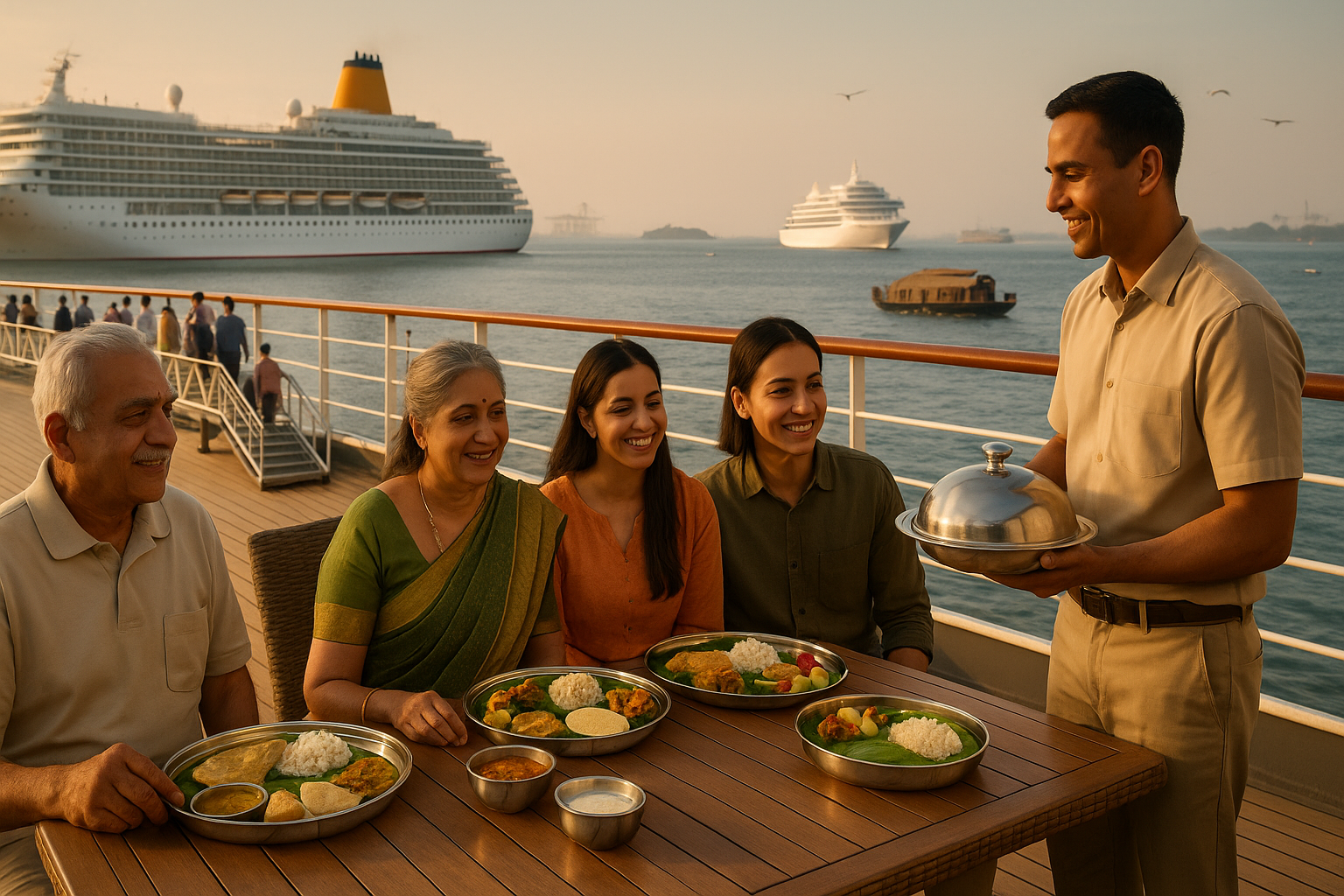
Many cruise lines offer vegetarian options; a few (notably Cordelia) emphasise pure‑vegetarian and Jain menus, Indian culinary spreads and cultural entertainment, while Ayurvedic and spa programmes appear on select Indian and boutique vessels.
The following bullets summarise core points before the details:
- vegetarian/Jain: vegetarian options are widely available; strict Jain or fully pure‑vegetarian meals may need advance confirmation.
- lines known for strict diets: Cordelia Cruises is commonly cited for pure‑vegetarian/Jain offerings; some boutique and domestic operators also promote full‑veg sailings.
- wellness/Ayurveda: Ayurveda-based spa treatments, yoga and wellness packages appear on select luxury and river cruises and via shore‑side partners.
Do most cruise lines provide vegetarian and Jain meal options as standard?
Most major cruise lines and domestic operators provide vegetarian options; strict Jain or fully pure‑vegetarian meals may require advance notice or special sailings.
Vegetarian dishes are commonly included in buffet and multi‑cuisine restaurants aboard both international and Indian cruises, so travellers can usually find familiar options. Jain requirements (no root vegetables, no cross‑contact with non‑veg items) are more exacting and may not be standard; you should confirm strict dietary handling with the cruise operator or booking agent in writing before travel. Mention specific needs early so kitchens can plan and the concierge or guest services can log requests. For more on onboard Indian dining and which ships specialise in authentic cuisine, see Best Cruises for Indian Food Lovers: Top Cruise Ships with Authentic Indian Cuisine.
Which cruise lines are known to accommodate strict Jain or pure‑vegetarian sailings?
Cordelia is commonly cited for accommodating pure‑vegetarian and Jain sailings; some boutique river and domestic lines also promote full‑veg experiences.
- Cordelia Cruises — promotes pure‑vegetarian and Jain food, Indian buffet spreads and Indian-themed entertainment; passenger reports and trade descriptions note concierge handling of dietary requests.
- Oberoi M.V. Vrinda (river/boutique) — exemplifies boutique cruises that emphasise regional Indian dishes and customised dining.
- M.V. Paramhamsa / M.V. Mahabaahu and similar domestic river or boutique operators — these lines highlight locally sourced ingredients and Indian culinary menus that may more easily support strict vegetarian or Jain needs.
Travellers should obtain written confirmation at booking for strict Jain or fully pure‑vegetarian requirements and ask how kitchens prevent cross‑contact.
Ayurvedic and wellness offerings: what to expect onboard and ashore?
Ayurvedic and wellness offerings (Ayurveda-based spa treatments, traditional massages and yoga) appear on select Indian and boutique vessels and at shore‑side partners.
Ayurveda services and specialised spa programmes are typical value‑adds on luxury ocean cruises and boutique river cruises that market an Indian experience; offerings can include Ayurvedic massages with herbal oils, yoga sessions, and curated wellness packages. On many itineraries these services are available as prebookable spa treatments onboard or through shore‑side partners at ports of call. Travellers who prioritise Ayurveda should check availability and pricing in advance and book packages early, since these treatments are selective and sometimes limited on each sailing.
Practical travel and booking considerations (passports, visas, connectivity, shore excursions)
Domestic "cruises to nowhere" may not require passports; international itineraries do — check the cruise operator's rules before you book. Passports are required for foreign ports, visas (Singapore, Schengen, transit) are commonly needed, Wi‑Fi/eSIMs are available for a fee, and shore excursions can usually be booked separately.
When is a passport required and when are domestic 'cruises to nowhere' or internal voyages exempt?
Yes — passports are required for international sailings; many domestic "cruises to nowhere" or internal coastal voyages may accept government ID instead. Pahun Holidays and other India cruise FAQs note that domestic routes (Mumbai–Goa, Mumbai–Lakshadweep) often have different ID rules than international departures. You should verify the operator’s embarkation rules (for example, Cordelia Cruises, Angriya, Resorts World One) and the booking documentation before travel, and carry your passport if any port of call is outside your country.
Which visas are commonly required for international cruise itineraries and how to manage multi‑country requirements?
Common visas and recommended steps are:
- Singapore visa — may be required for cruises that embark from or call at Singapore; check Singapore entry rules for your nationality.
- Schengen visa — may be required for itineraries with Schengen-area port calls.
- Transit visa — may be required for certain airport/port transits depending on nationality and transit duration.
- How to manage multi‑country requirements — You should check entry rules for every port of call, confirm passport validity, apply through the relevant embassies or a visa agency, and consider concierge or agent services (for example, Mauzee Holiday’s visa support) to coordinate multiple visas and timing.
Internet & connectivity onboard: Wi‑Fi, eSIMs and data tips
Wi‑Fi is commonly available onboard for a fee or via packages; travellers can use eSIMs or local SIMs in port to reduce costs and should expect limited bandwidth at sea. Cruise.travel.in reports that ships offer tiered Wi‑Fi plans (packages or pay-as-you-go) and that bandwidth may be constrained. You should buy a ship package only if you need consistent access, install an eSIM or buy a local SIM when in port to save money, and download maps, entertainment, and travel documents for offline use before leaving port.
Can shore excursions be booked separately from the cruise package?
Yes — shore excursions can usually be booked through the cruise operator or independently. Operator excursions often provide convenience, vetted guides, and coordinated transfers, while independent local tours can be cheaper; Mauzee Holiday and other agents highlight cost and availability differences. You should compare operator prices vs reputable local operators, read reviews, confirm pick‑up/drop‑off logistics and cancellation terms, and keep the cruise operator’s contact info handy if you book independently.