A "cruise" in this guide means the travel product represented by cruise travel and cruise ship travel; this page maps which cruise lines and ships provide Indian — specifically South Indian — cuisine (dosa, idli, coastal specialties) and shows how to verify and use those offerings when booking and onboard. Major mainstream lines — Royal Caribbean, Norwegian, Princess, Carnival, P&O, and Celebrity — offer Indian cuisine either fleetwide or on select ships.
Ship‑level examples anchor the guide: P&O’s Sindhu is now available fleetwide (Arcadia, Arvia, Aurora, Azura, Britannia, Iona, Ventura) with individually priced à la carte menus, while Carnival’s Masala Tiger appears on select ships (reported on Splendor and listed for Celebration, Jubilee, and Mardi Gras) with complimentary lunch and an extra‑charge dinner service. Venue types matter: freshly made dosa most often appears at live tiffin/chef stations or in specialty Indian venues, and Norwegian and Royal Caribbean are frequently cited for the most extensive buffet Indian sections. Sindhu and Masala Tiger both feature Keralan/Malabar seafood and tandoor preparations. For special diets, cruise lines generally accept pre‑ordered vegetarian, Jain, and halal requests; you should request 48+ hours ahead and confirm via the cruise app or dining manager.
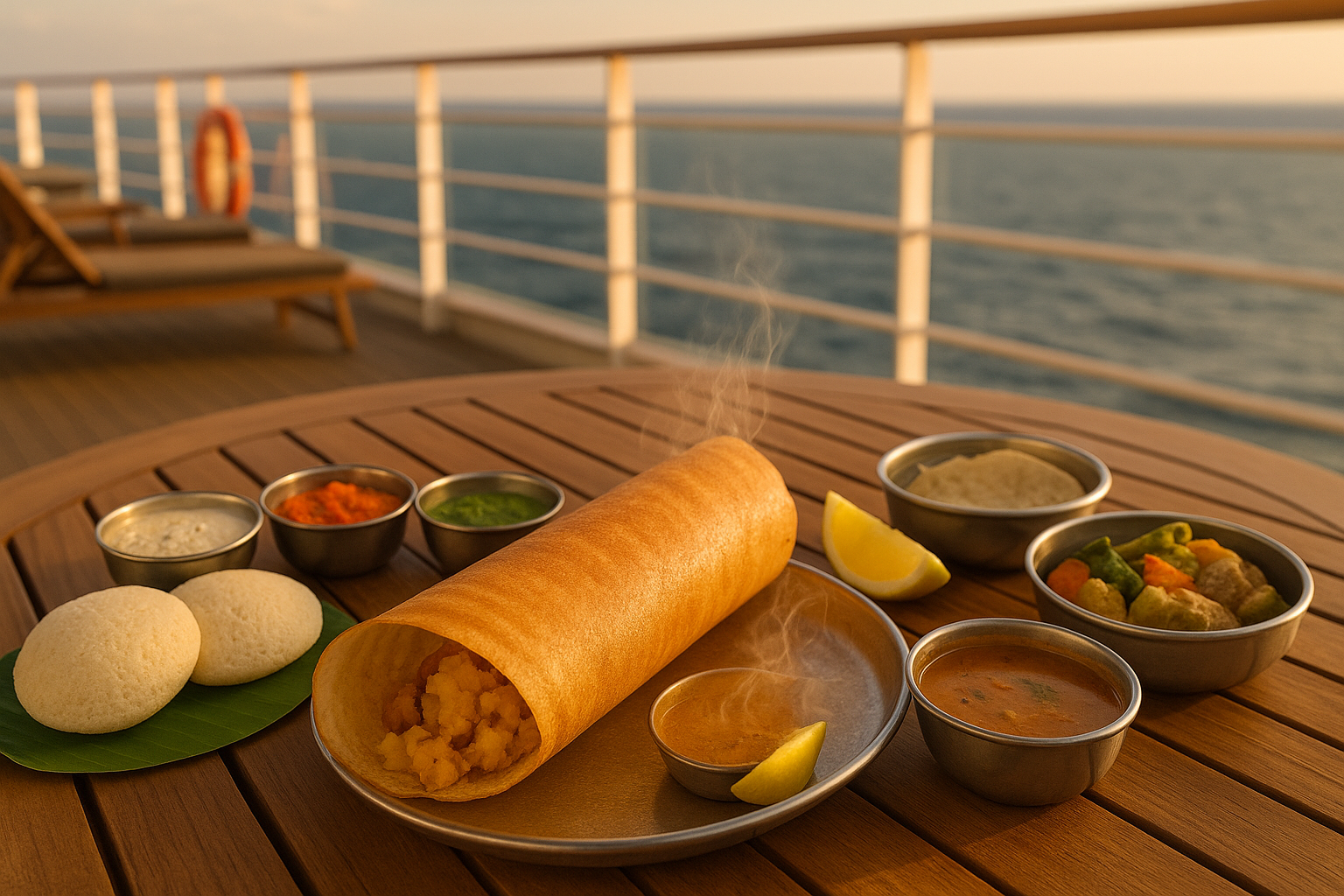
Which cruise lines offer Indian cuisine across their fleets?
Major mainstream lines (Royal Caribbean, Norwegian, Princess, Carnival, P&O, Celebrity) offer Indian cuisine either fleetwide or on select ships.
Below is a short list showing fleetwide examples and common select‑ship patterns.
- fleetwide
- P&O Cruises — Sindhu is available fleetwide on P&O ships.
- select‑ship (Indian options appear on particular vessels or in specialty venues)
- Carnival — Masala Tiger is a dedicated Indian venue that appears on specific Carnival ships (for example, Carnival Splendor) and may appear on others.
- Royal Caribbean — Indian dishes commonly appear in main dining rooms and the Windjammer buffet on many ships, and dedicated menus or specialty options appear on select vessels.
- Norwegian Cruise Line — Indian stations and menu items commonly appear in buffets and some main dining rooms on specific ships.
- Princess, Celebrity, Holland America — these lines commonly offer Indian dishes on select ships’ buffets, main dining rooms, or specialty venues rather than uniformly across every ship.
Which cruise lines have fleetwide Indian menus versus select‑ship offerings?
Fleetwide means Indian cuisine appears regularly across a line’s ships; select‑ship means Indian offerings appear only on particular vessels or in specialty venues. Fleetwide examples include Sindhu on P&O, which Cruise Critic reports is available fleetwide.
Here are concise examples grouped by that distinction:
- fleetwide
- P&O Cruises — Sindhu is an example of a fleetwide Indian restaurant.
- select‑ship
- Carnival — Masala Tiger is a select‑ship specialty restaurant (not on every Carnival ship).
- Royal Caribbean, Norwegian, Princess, Celebrity, Holland America — these lines often include Indian dishes in rotating main-dining or buffet menus or run dedicated Indian venues on particular ships.
How can I confirm Indian-menu availability for a specific sailing or ship?
Check the ship’s dining page, cruise app, pre‑cruise menus, and contact the dining manager.
Check the ship’s dining page first and then follow these steps you should use:
- Look at the ship’s “Dining & Menus” page and downloadable menu PDFs for specialty restaurants and daily menus.
- Use the cruise line’s mobile app to view live menus, specialty-restaurant listings, and event schedules.
- Search the ship’s dining pages for restaurant names (Sindhu, Masala Tiger) or signals such as “Indian,” “tandoor,” or themed Indian nights.
- Email or call the ship’s dining manager or the line’s reservations team to confirm availability and ask whether specific items (for example dosa or idli) or themed meals will be served.
For additional context on where Indian offerings appear and how lines advertise them, see Indian Restaurants on Cruise Ships: Availability, Options, and Dining for Indian Travelers.
Which cruise ships and venues have dedicated Indian restaurants (examples: Sindhu, Masala Tiger)?
Sindhu is available on specific P&O ships and Masala Tiger is available on select Carnival ships (with some reporting differences between official pages and fan sites).
Sindhu is described as fleetwide on P&O, appearing on Arcadia, Arvia, Aurora, Azura, Britannia, Iona, and Ventura; menus are specialty, individually priced, and subject to change. Masala Tiger appears on Carnival's Masala Tiger dining page for some newer Carnival ships (for example Carnival Celebration, Carnival Jubilee, and Mardi Gras are shown in Carnival’s carousel) and is reported by fan sources to be the dedicated Indian venue on Carnival Splendor (with lunch often included and dinner offered as a paid specialty service). Availability can vary by ship and itinerary, so verify before booking.
Below are ship-level examples of each venue and availability notes:
- Sindhu → Arcadia, Arvia, Aurora, Azura, Britannia, Iona, Ventura (P&O) (fleetwide across these P&O ships; specialty restaurant with individually priced menu and sample menus subject to change)
- Masala Tiger → Carnival Splendor (reported by fan guides; lunch included, dinner extra) and listed on Carnival dining pages for Celebration, Jubilee, and Mardi Gras (availability reported and may vary; verify with Carnival)
Which ships currently have Sindhu or Masala Tiger?
Sindhu is available on specific P&O ships and Masala Tiger is available on select Carnival ships, though sources differ on some Carnival placements.
The following list gives the ship names reported in official and fan sources:
- Sindhu — Arcadia, Arvia, Aurora, Azura, Britannia, Iona, Ventura (P&O) (listed fleetwide on P&O; menu items individually priced and sample menus can change)
- Masala Tiger — Carnival Splendor (reported by Carnival fan guides; complimentary lunch with optional paid dinner)
- Masala Tiger — Carnival Celebration, Carnival Jubilee, Mardi Gras (shown on Carnival’s Masala Tiger page/carousel; availability can vary by ship)
How do I check ship‑specific restaurant availability and menus?
Check the ship’s official dining pages, cruise app, specialty-dining reservation pages, and contact the cruise line or dining manager to confirm availability.
Follow these steps to confirm a venue and its menu:
- Visit the ship’s official dining or ship page on the cruise line website and download any posted menu PDFs — these should show current specialty restaurants.
- Check the cruise line’s branded dining landing pages (e.g., Masala Tiger on Carnival) and the ship’s specialty-dining reservation system for listed offerings.
- Use the ship’s mobile app or your booking extras page to see onboard dining options and reservation availability.
- Consult reputable fan sites and cruise blogs for recent guest reports (these can be helpful but can sometimes conflict with official listings).
- Call the cruise line or ask the ship’s dining manager once onboard to confirm restaurants, meal inclusions (lunch vs. paid dinner), and any recent changes.
Note that venues and menus can change due to retrofitting, seasonal deployment, or menu updates, so you should verify availability before making specialty reservations.
What dining venues on cruise ships serve South Indian dishes such as dosa and idli?
Main dining rooms, buffets, specialty restaurants, live tiffin/chef stations, and room service serve South Indian dishes; freshly made dosa most often appears at live tiffin or specialty counters rather than room service.
Cruise lines put Indian options into different venues depending on ship and demand: main dining rooms and buffets carry rotating Indian items, specialty Indian restaurants offer fuller regional menus, and live tiffin or chef stations deliver made‑to‑order items like freshly made dosa and idli. Availability may vary by ship and itinerary and is more common where ships list Indian programming or have Indian chefs onboard.
Below are the common venue types and what to expect from each onboard:
- Main dining room — Full‑service dinners and some breakfast menus include regional South Indian items as plated or à la carte options; cruise lines commonly add vegetarian and regional dishes to nightly menus.
- Buffet (Lido/Windjammer/Horizon) — Rotating stations present idli, dosa batter pancakes, or prepared South Indian curries during breakfast or themed lunch/dinner rotations; availability may vary by ship and day.
- Specialty restaurant — Dedicated Indian venues (for example, Sindhu on P&O and Masala Tiger on Carnival Splendor) serve authentic South Indian and coastal dishes as part of a focused menu.
- Live tiffin / chef station — Live tiffin counters, chef demos, or tiffin‑style lunches deliver freshly made dosa and small‑plate South Indian items on sea days or during themed events.
- Room service — Room service may offer simplified South Indian choices on request, but freshly made dosa usually appears at live stations or specialty venues rather than via room service.
Are dosa and idli typically available at cruise breakfast buffets?
Sometimes; dosa and idli appear at breakfast buffets or tiffin stations on certain ships, but availability varies by ship and itinerary.
Dosa and idli are reported at breakfast on cruises that feature Indian programming or chefs, and they may appear on buffet breakfast lines or at a morning live station. Typical reported venues include breakfast buffet sections on lines that rotate Indian items, and tiffin‑style service on ships or cruises that promote regional Indian meals.
Here are common places passengers report finding dosa and idli:
- Buffet breakfast stations — Guests sometimes find idli, dosas, or sambar on the Lido/Windjammer/Horizon buffet during morning service.
- Tiffin or morning live counters — Cruises that run tiffin lunches or themed Indian days often serve dosa and idli from a live counter.
- Specialty/Indian breakfast events — On cruises with Indian specialty programming or culinary events, breakfast offerings may include South Indian staples.
Which onboard venue is most likely to serve freshly made dosa (live tiffin/chef stations or specialty events)?
Live tiffin/chef stations and specialty Indian venues are most likely to serve freshly made dosa.
Freshly made dosa is typically produced at live tiffin counters, chef demos, or inside specialty Indian restaurants during dedicated service times or themed events. To find freshly made dosa onboard, check the ship’s daily program and specialty‑dining listings, use the cruise app, or ask the dining manager or head chef about tiffin lunches and live cooking demonstrations.
Typical setups where you’ll get freshly made dosa:
- Live tiffin/chef stations — On sea‑day tiffin lunches or live cooking spots that batter and cook dosas to order.
- Specialty Indian restaurants and events — Dedicated venues and themed culinary nights serve made‑to‑order dosa as part of a regional menu.
- Chef demonstrations and food‑festival days — Short, scheduled events where chefs prepare regional dishes to sample.
Where are coastal South‑Indian seafood specialties typically served (main menu vs specialty venue)?
Coastal South‑Indian seafood specialties appear mainly in specialty Indian restaurants and themed nights, and occasionally on buffet rotations or main‑dining menus.
Malabar and Keralan seafood dishes (for example Malabar prawn curry or Keralan‑style spiced crab) feature strongly on specialty Indian restaurant menus and at themed seafood nights where chefs showcase coastal recipes. These coastal items may appear less regularly on main‑dining menus or buffet rotations unless a ship specifically programs regional Indian cuisine.
Examples and typical placements:
- Specialty restaurants — Venues like Masala Tiger (Carnival Splendor) and Sindhu (P&O Cruises) list Malabar and Keralan seafood dishes as main menu items.
- Themed nights and seafood events — Coastal recipes surface during Indian theme nights or seafood‑focused dinners.
- Buffet rotations and main dining room — Coastal South‑Indian seafood may appear occasionally in buffet rotations or as a special on the main menu, depending on the ship’s culinary program.
Which cruise lines provide the broadest selection of Indian dishes (including regional coverage)?
Royal Caribbean, Celebrity, Princess, Carnival, and P&O are often cited for the broadest breadth of Indian dishes.
Breadth here refers to menu variety and regional coverage across specialty venues, buffets, and named regional dishes like Malabar, Keralan, and dosa.
Below is a short list of leaders with concrete supporting signals from ship menus and venue offerings.
- Royal Caribbean — Offers dedicated Indian menus on select ships and Indian selections in the Windjammer buffet, giving wide buffet and main-dining reach.
- Celebrity — Provides elevated, gourmet Indian options and daily regional/vegetarian dishes in specialty and main dining formats.
- Princess — Emphasizes regional diversity in buffet and casual venues (Horizon/Lido-style buffets) and rotates regional Indian dishes.
- Carnival — Features the Masala Tiger specialty venue with tandoor cooking, rotating lunch buffet and an à la carte dinner menu, adding focused regional items like Malabar-style seafood.
- P&O — Operates the Sindhu specialty restaurant fleetwide with Keralan/Malabar-style dishes, thali plates, and occasional tiffin/tiffin‑style lunches that showcase coastal specialties.
Which cruise lines are best for South‑Indian and coastal seafood specialties?
P&O’s Sindhu and Carnival’s Masala Tiger are the clearest examples for South‑Indian and coastal seafood specialties.
Sindhu and Masala Tiger both feature Keralan/Malabar‑style seafood and tandoor preparations that highlight coastal spice profiles.
- Sindhu (P&O) — Menu includes Keralan‑style spiced crab, Malabar pancakes, vegetarian thali plates, and occasional Tiffin lunch offerings that spotlight South Indian coastal flavors.
- Masala Tiger (Carnival) — Lunch buffet and dinner menu list Malabar prawn curry, tandoor fish and prawn preparations, and classic coastal mains.
- Royal Caribbean & Princess — Both frequently include coastal seafood dishes across buffets and specialty rotations, so South‑Indian and coastal dishes may appear in Windjammer/Horizon buffet rotations and specialty menus.
Which cruise line offers the most extensive Indian buffet options?
Norwegian and Royal Caribbean are frequently cited for the most extensive buffet Indian sections.
Evaluate buffet depth by counting curry choices, presence of a dedicated Indian station, and live/rotating stations in the buffet.
- Norwegian — Frequently reports a dedicated buffet section for Indian items, offering multiple curries and rotating selections.
- Royal Caribbean — Features Indian selections in the Windjammer buffet and main dining room rotations, widening buffet availability.
- Carnival — Some ships provide substantial Indian lunch buffets (including Masala Tiger lunch on ships that carry the venue), adding depth to buffet offerings.
Use a quick checklist to evaluate buffet depth: number of distinct curries, dedicated Indian station, live‑cooking or carving station, variety of breads and rice dishes, and vegetarian options.
How do cruise menus vary in regional coverage and what signals indicate authentic regional offerings?
Trained Indian chefs, named regional dishes, tandoor ovens, thali/tiffin formats, and consistent guest reviews indicate authentic regional coverage.
These signals suggest a ship goes beyond token curries toward regionally specific cuisine, though they may not prove authenticity outright.
- Trained chefs & tandoor presence — The presence of chefs trained in Indian cuisine and a clay tandoor suggests deliberate regional technique and flavor profiles.
- Menu specificity (named regional dishes) — Menus that list Keralan, Malabar, dosa, thali, or tiffin formats indicate intentional regional coverage rather than generic “Indian.”
- Thali/tiffin formats & rotating menus — Offering thali plates or tiffin‑style lunches signals a commitment to regional presentation and variety.
- Guest reviews & consistent service — Repeated guest praise for specific regional dishes across sailings suggests reliable execution.
For travel planning, verify authenticity signals with the dining manager or head chef when it matters to you; this should confirm whether a given sailing will deliver the regional dishes you expect.
What menu highlights and cooking techniques do specialty Indian venues feature?
Specialty Indian venues typically feature tandoori items, biryanis, thali spreads, dosa/idli breakfast options, and regional coastal curries; presence of a tandoor and menu specificity are key authenticity signals.
Below are common menu categories and the signature preparations you should expect.
- Grills / Tandoor: Signature tandoori meats and kebabs grilled in a clay oven. Presence of tandoor: yes if the venue advertises a clay tandoor (for example, Masala Tiger); tandoor cooking delivers char, smoky flavor, and high‑heat searing.
- Rice / Biryani: Layered, spiced biryanis and pilafs prepared by marinating proteins and slow‑cooking with basmati rice. Ships commonly list biryani on specialty menus (Masala Tiger) and as a highlighted entree.
- Breakfast / Street (Dosa, Idli): Dosas cooked on griddles and idlis steamed to order for breakfast or brunch; these use specific equipment (griddles, idli steamers) and appear at breakfast services or special South‑Indian menus.
- Thali / Tiffin: Plated thali spreads and tiffin‑style light lunches offering multiple small dishes on one tray; Sindhu and similar venues may run tiffin lunches on sea days to showcase regional variety.
- Vegetarian spreads: Extensive vegetarian options and regional vegetarian classics (dal, paneer dishes, vegetable biryani) as a deliberate menu focus on many Indian specialty venues.
What menu highlights and cooking techniques do these specialty venues feature?
Signature items include tandoori meats from a tandoor, biryani, thali platters, dosas/idlis at breakfast or tiffin events, and coastal curries.
Below is a quick list of the signature dishes and how they are typically prepared onboard.
- Biryani: Marinated proteins or vegetables layered with spiced basmati rice and slow‑cooked so flavors meld; appears on specialty and lunch menus.
- Tandoori / tandoor items: Chicken, fish, lamb, and kebabs cooked at very high heat in a clay oven; tandoor imparts smoky char and is a clear authenticity signal when present.
- Thali: Multiple small portions (vegetable, dal, rice, bread, pickles) served together on a platter; served as a vegetarian or mixed option to sample regional dishes.
- Dosa and Idli: Dosas are batter crepes griddled to crispness; idlis are steamed rice cakes. They are usually prepared on dedicated griddles/steamers and appear at breakfast or themed brunches.
- Coastal / Keralan preparations: Coconut‑based curries and Malabar seafood dishes prepared with regional spice blends, often highlighted on menus like Sindhu’s Keralan items.
How does chef training and kitchen capability affect authenticity (trained Indian chefs, equipment like tandoors)?
Chef training, ingredient sourcing, and onboard equipment like tandoors materially improve menu authenticity.
Trained Indian chefs and chef training programs are strong signals that a ship aims for authentic technique and flavor; industry writeups note trained Indian chefs as an authenticity indicator. Kitchen capability matters: a listed clay tandoor or dedicated dosa griddle makes true tandoori and dosa preparations possible.
Ask the line whether chefs have Indian training and whether traditional equipment is installed. When you ask the line, request specifics such as:
- Is there a clay tandoor onboard? (presence of tandoor: yes/no)
- Do the chefs include Indian‑trained cooks or staff who've completed Indian culinary programs?
- Are regional ingredients (e.g., specific spice blends, coconut, basmati) regularly stocked?
- Do menus offer thali or tiffin formats rather than single fusion plates?
Do cruises offer live cooking demos, tiffin lunches, or cultural food events and where are they usually scheduled?
Yes — many ships run live cooking demos, themed Indian nights, and occasional tiffin lunches; check the daily schedule, cruise app, or specialty dining calendar.
Live cooking demonstrations and themed events are commonly programmed as part of onboard culinary offerings, and cruise coverage frequently lists these activities. Sindhu, for example, serves light tiffin lunches on certain sea days, while industry guides describe live demos and Indian theme nights as part of ship programming.
Check the ship’s daily program or app for timing and locations, and look for:
- Live cooking demo sessions in the main dining venue or specialty restaurant theater.
- Tiffin lunches or small‑plate Indian events scheduled on sea days or during cultural theme nights.
- Indian‑themed evenings (Holi/regionally focused nights) listed in the specialty dining calendar or events schedule.
What dietary accommodations (vegetarian, Jain, halal) can I request for Indian meals on a cruise?
Cruise lines generally accept pre‑ordered vegetarian, Jain, and halal requests; passengers should request 48+ hours ahead and confirm via the cruise app or dining manager.
Use these channels and timelines to pre‑order and confirm special diets:
- At booking: add special‑diet details in the booking portal or tell your travel agent so the request is logged.
- Cruise line app / pre‑cruise menu: pre‑order meals and reconfirm choices before sailing.
- Email or phone the ship’s dining manager (or head chef) to describe strict requirements and request confirmation.
- Reconfirm 48–72 hours before sailing and again on embarkation day with the dining manager.
Can I pre-order or request Jain, vegetarian, or halal Indian meals before my cruise?
Yes — most cruise lines accept pre‑order requests for Jain, vegetarian, and halal meals.
You should pre‑order so kitchens can source ingredients and plan substitutions; cruisesolutioner and cruisediscover note that pre‑cruise menu requests are standard and that passengers should submit custom meal requests 48+ hours ahead. Pre‑order again via the cruise app and confirm with the dining manager so your restrictions are understood.
How far in advance and through which channels should I submit special‑diet requests (vegetarian/Jain/halal)?
You should submit requests at booking and reconfirm 48–72 hours before sailing via the cruise app, booking portal, or by emailing/calling the dining manager.
Follow these steps to pre‑order and confirm special diets:
- At booking: enter dietary needs in the booking portal or tell your agent so the request is recorded.
- Use the cruise line app or pre‑cruise menu to pre‑order specific Indian dishes and note Jain/halal/vegetarian restrictions.
- Email or call the ship’s dining manager (or head chef) with details—ingredient lists, no‑onion/no‑garlic notes for Jain requests, or halal requirements.
- Reconfirm 48–72 hours before sailing and remind staff on embarkation day to ensure the request is being prepared.
Will specialty restaurants and main dining rooms reliably accommodate strict Jain or halal rules (no onion/garlic, separate preparation)?
They often can accommodate strict Jain or halal rules, but reliability varies by ship, kitchen workflow, and ingredient sourcing.
You should verify with the dining manager and, if possible, the chef; cruisesolutioner recommends direct conversations for specific needs. Helpful verification steps include:
- Review the specialty or main‑dining menu in advance and pre‑order dishes you want modified.
- Ask the dining manager whether the kitchen can omit onion/garlic or follow Jain cooking rules and whether separate preparation or plating is possible to reduce cross‑contamination.
- For halal meat, ask if the ship can source halal‑prepared protein or how meat is procured and handled; request written confirmation if this is essential.
- Meet the dining manager or chef on embarkation day to confirm your pre‑order and any separate‑prep arrangements.
How do specialty Indian restaurants compare for authenticity and pricing, and how do I reserve them?
Specialty venues vary: Sindhu is higher‑end with à la carte per‑item pricing, while Masala Tiger commonly includes lunch and charges for dinner; reserve via the ship app or specialty‑dining desk and expect cover charges for dinner on many ships.
Both venues signal authenticity (specialty chefs, tandoor cooking, regional dishes) but follow different meal models and price cues, so pick based on whether you want an included lunch buffet or a paid, sit‑down experience.
Below is a brief side‑by‑side comparison.
- Sindhu — authenticity signals: positioned as a standout specialty restaurant with regional dishes (Keralan options, tiffin-style lunches) and a chef-driven menu; price model: à la carte per item (sample starters ~£5–7, mains ~£9–15, desserts under £5; occasional tiffin items around £2.25); reservation channel: reservations recommended via the ship app or specialty-dining desk, and the venue is popular fleetwide.
- Masala Tiger — authenticity signals: tandoor-forward cooking and coastal/Malabar dishes on the menu; price model: lunch is included in cruise fare (rotating buffet), dinner is paid à la carte (reported mains ~US$15, premium mains up to US$38; starters/desserts reported US$4–$12); reservation channel: lunch generally open as included service, dinner should be booked through the ship app or dining desk and is available only on selected ships (e.g., Carnival Splendor).
How do Sindhu and Masala Tiger differ in pricing models and reservation requirements?
Masala Tiger includes lunch and charges for dinner; Sindhu charges à la carte per item and recommends reservations.
- Masala Tiger: lunch is included as a rotating buffet; dinner is a paid à la carte specialty service with reported main-course prices around US$15 and premium items up to US$38, and starters/desserts reported US$4–$12; dinner reservations should be made via the ship app or the specialty-dining desk.
- Sindhu: menu items are individually priced à la carte (sample pricing reported: starters ~£5–7, mains ~£9–15, desserts under £5) and the restaurant recommends reservations through the ship app or dining desk; occasional light "Tiffin" lunches appear as low‑cost small plates.
Which venue is more likely to include South‑Indian dishes like dosa, idli, and coastal curries on its menu?
Specialty restaurants and tiffin/live‑chef stations are most likely to include South‑Indian items; main dining and buffet rotations are less consistent.
- Sindhu: most likely to feature South‑Indian and Keralan dishes and even Tiffin-style small plates, so it’s a strong bet for dosa/idli-style and coastal curry flavors.
- Masala Tiger: likely to include coastal and Malabar-style seafood (for example, Malabar prawn curry is on some menus) and tandoor classics, so it may offer South‑Indian coastal curries though South‑Indian breakfast items are less consistently highlighted than in a tiffin or specialty South‑Indian menu.
- General tip: look for specialty venues advertising "tiffin," "Keralan," or "Malabar" to find South‑Indian dishes; buffet/main dining offerings may rotate and are less reliable.
When should I expect extra charges and how far ahead should I book specialty Indian dining?
Expect extra charges for specialty dinner services and premium mains; you should book specialty dining as soon as reservations open (often at booking or pre‑cruise online) via the cruise app or the specialty‑dining desk.
- When extra charges apply: expect cover charges or à la carte pricing for specialty dinner services and premium mains (Masala Tiger dinner and premium items, Sindhu main plates and some tiffin items are individually priced).
- Booking timing and tactics: you should reserve dinner slots early—ideally when specialty dining opens (pre‑cruise online or at booking) or at embarkation through the app or dining desk; use the ship app to monitor availability, book sought‑after dinner times promptly, and consider included lunch services (Masala Tiger) or off‑peak tiffin offerings if dinner reservations are full.